Saturday, June 18, 2022

Monroe Family Organics CSA Newsletter for Week 1

Farm Update


Taran learned how to drive the tractor
on Thursday!  Up until now, Fred has
been the only one who could drive the 
tractor, which created a bottleneck that
prevented our most efficient use of time.
Now that we have two tractor drivers,
that will make our lives way easier!

Hi everyone!  Are you ready for some organic fruit and veggie goodness next week?  I know we are!

Launching the CSA is always a big project each year, but as we enter our 12th CSA season, I feel more prepared than ever for our biggest week of the year.  Aside from the normal planting, harvesting, irrigating, weeding, and delivering that we always have going on in June, I always spend a significant amount of time the week before we launch the CSA getting the systems up and running that will carry us through the season as smoothly as possible.  There is actually quite a lot of administrative work that happens behind the scenes at the farm, and since the farm is a dynamic natural system that is always changing and can’t be automated, my systems need to be able to flex and stretch as well.  There will always inevitably be things that slip through the cracks, but after more than a decade of doing this, I know what to look for and what to pay extra attention to.  So that said, here is some timely information for everyone so we can all have an awesome, fun, smooth first week of the CSA!

-It’s a good idea to add my phone number to your contacts, just in case you’re on your way to the drop-off and have a question!  I don’t frequently check my email in the afternoons of CSA drop-off days because I’m on the road, but if you need me, you can call or text me at 517-896-6884. 😊

-If you get a prepacked share at the Lansing, Okemos, St. Johns, or hospital drop-offs, I’ll send out a text to all the folks at those locations when I deliver the shares, so you know when you can come get your produce.  If you’d prefer not to receive those texts, just send me a quick email and I’ll take you off the text list.  Or if the phone number you entered when you signed up for the CSA isn’t a cell phone, just send me a good phone number for you to get those texts.

-Week 3 of the CSA is 4th of July week! Independence Day falls on a Monday this year, so if you normally get your CSA share on Mondays, we will be delivering shares as normal.  However, if you have plans and can’t make it to the drop-off, or you normally have your share delivered to your workplace but you won’t be there, just let me know!  We can postpone your share and get you a double share the next week, or you can arrange to pick up your share at another drop-off that week.  Plenty of folks who can’t make it to a Monday drop-off in Alma choose to pick up their share the next day in Mt. Pleasant, and we can absolutely do that!  Just make sure to let me know by Sunday, July 3rd if you want to postpone your share on July 4th or pick it up somewhere else.

So that’s it for the housekeeping stuff!  As for the farm itself, now is the time of year when everything comes to life.  There’s a reason why we wait to start the CSA until the middle of June, and it’s because now is when all of the veggies we’ve been waiting to come into season explode onto the scene in their full vibrancy.  Up until now, we’ve been harvesting our cooler season crops (lettuce, kale, spinach, radishes) and smaller amounts of some warm season crops (zucchini, cucumbers, etc.) but now a lot more veggies are ready in larger amounts.  Things have been growing like crazy, including the weeds.  Our farmhands, Callie, Taran, Tate, and I have been weeding lettuce, cilantro, dill, and onions over the last few days in an effort to keep the weeds under control, but there is still so much to do.  Plenty of home gardeners complain about the never ending weeds, but when you’re trying to keep tens of thousands of bed feet from getting taken over by weeds, that’s another story altogether.  Fortunately, I actually love the quick, methodical movements of weeding, and I love being outside with the sun on my back, so the work is enjoyable to me.  And I love that for every section I weed, we’re making sure that the plants we do want aren’t having to compete too hard with the plants we don’t want for scarce resources like water and sunlight, so they can grow up to be big and strong and delicious. 

And as they say, it’s important to know when to hold ‘em and when to fold ‘em.  One of the crops we have turned loose over the last few years are our strawberries, because we always struggled with them in our soil and it was so hard to have enough for everyone.  However, we know that strawberries are really important to you all!  We pride ourselves on being a single-farm CSA, where everything we provide in the shares is grown by us, but we make an exception for the strawberries.  The strawberries in the shares over the upcoming weeks were actually grown by Jonas Miller, a friend of ours who is also certified organic and just has much better soil for strawberries.  We almost never include items in the shares that weren’t grown on our farm (the strawberries are pretty much the only things from another grower that we’ve ever had in the shares), but we always want to be really transparent when we do, because it’s so important to us for you to be able to know where your food comes from.  It’s also super important to us to only have certified organic produce in the shares, so that’s also non-negotiable for us if we were ever to include anyone else’s produce.  If you have any questions about the strawberries, or about Jonas’ farm, just let me know!  And while you can’t call Jonas and ask him about the berries (because he’s Amish and doesn’t have a phone), I can get you his address if you’re interested in stopping by his farm and talking to him. 

So that’s it!  Just let me know if you have any questions, and we’ll see you next week at the drop-off! 😊


What to Expect in the Shares this Week


If you pick up at our Alma, Mt. Pleasant, or Midland drop-off, here are the options for your shares!  If you have a half share, you’ll choose one item from each choice category, and if you have a full share, you’ll choose two.  And if there is something you don’t like or can’t eat, you can bring it to the trading station at the end and trade it for something you like better. 


  • Strawberries for everyone!
  • Spring mix for everyone!
  • Kale or frisee
  • Bok choy or Swiss chard
  • Garlic scapes or baby head lettuces
  • Green onions for everyone!
  • Basil, cilantro, or microgreens


If you pick up at our Lansing, Okemos, St. Johns, Midland hospital, or Alma hospital drop-off, or if you have home or workplace delivery, here are your options!  We have three different prepacked shares, and you can let me know which one you want by filling out this quick form by lunchtime the day before your drop-off.  If you have a half share, you can choose one of these options, and if you have a full share, you’ll choose two.


Share A:

  • Strawberries
  • Spring mix
  • Kale
  • Swiss Chard
  • Garlic scapes
  • Green onions
  • Microgreens


Share B:

  • Strawberries
  • Spring mix
  • Kale
  • Bok choy
  • Baby head lettuce
  • Green onions
  • Cilantro


Share C:

  • Strawberries
  • Spring mix
  • Frisee
  • Bok choy
  • Garlic scapes
  • Green onions
  • Basil


Recipes


The fun part about being part of a Community Supported Agriculture program (besides knowing your farmers, eating locally, supporting environmentally friendly farming practices, getting truly fresh and delicious food, and engaging with your community) is getting to try new things!  Most of the stuff we have in the shares will be old favorites (like lettuce, green onions, and strawberries), and some of it might be new to you.  I always try to provide a few recipe ideas for items you may not have worked with before, and the ones that might not be as familiar this week are bok choy, garlic scapes, and frisee.  So definitely check out these recipes for some inspiration, and I always love chatting about recipes at the drop-offs too, so let me know if you have some good ones! 


Here are 10 Tasty and Easy Bok Choy Recipes from The Spruce Eats!  There are lots of options here, so you can choose what works for you, the amount of time you have, and what ingredients you have on hand! 


And here are 7 Things to do with Garlic Scapes from Serious Eats!  I love the wealth of great ideas that you can then tweak and make your own!


I was looking around online, and most of the frisee salads I found kind of look the same.  But I wanted to let you know what we did with frisee a few days ago that was super delicious!  Since frisee is an endive with kind of a bitter (in a good way!) flavor, using a sweet flavor to offset the bitterness is a great way to bring out the flavor.  Fred just made a quick frisee salad with a dressing he whipped up out of balsamic vinegar, chopped basil, and blackberry jam, and he put little chunks of brie cheese on top.  The flavor was lovely, and the brie added such a rich texture.  So if you have those ingredients or something similar on hand, that’s a great way to make a quick frisee salad that feels really fancy!

Sunday, June 12, 2022

CSA Start Dates and What to Expect at Your First Drop-Off!

Farm Update


Hi everyone!  We have exciting news!  The CSA will officially be kicking off the week of June 20th, so mark your calendars!  And just send me a quick email so I know you got the message, because I want to make sure no one misses their first week of veggies! 


The first Alma drop-off will be Monday, June 20th from 5-6 PM out in front of His Place on Superior St.


The first Mt. Pleasant drop-off will be Tuesday, June 21st from 5-6 PM behind Herbs Etc. on Broadway.


The first Lansing drop-off will be Wednesday, June 22nd between 4:30 and 9 PM at the Soup Spoon Café on Michigan Ave.


The first Okemos drop-off will be Wednesday, June 22nd between 4:30 and 6 PM at Mert’s Specialty Meats on Grand River.


The first St. Johns drop-off will be Wednesday, June 22nd anytime after 2:30 PM at the home of a CSA member who lives around the corner from the hospital.  I’ll send all of you St. Johns folks a separate email with the address shortly.


The first Midland drop-off will be Thursday, June 23rd from 5-6 PM in the pavilion behind the Eagle Ridge Church of God on Waldo Rd.


The first Midland MyMichigan Hospital drop-off will be Thursday, June 23rd anytime after 3 PM at the seating area behind the Center for Women’s Health.  There is a place where delivery vehicles pull over on Campus Ridge Drive, and a sidewalk goes up to the back of the building.  There are a few picnic tables there under some shady trees, and that is where you’ll find your CSA shares!


And if you get home or workplace delivery, I’ll be dropping off your shares on the afternoon of whatever day we deliver to your town, probably between 2 and 4:30 PM.


So there you have it!  I’d definitely recommend setting up a repeating calendar event or reminder so you don’t forget!  The CSA will go for 19 weeks until the end of October.


Some other exciting news is that we are (probably) adding a drop-off at MyMichigan Medical Center in Alma!  This is currently in the works, and we just started talking about it with the hospital on Thursday.  We had some CSA members who were affiliated with the hospital ask if we could do a hospital drop-off in Alma like we do in Midland, and I said that if we had 10 hospital employees sign up, we could do a delivery there.  So far we have several people signed up for the Alma hospital drop-off, so it’s looking like it’s probably going to happen.  So if you are signed up for our regular Alma drop-off, but you work at the hospital and would like to switch to the hospital delivery, just let me know and I’ll change you over!  The main difference would be that at the hospital drop-off, we’d do prepacked shares instead of you getting to pick your produce out from the tables.  You can learn more about that later in the newsletter when I talk about how our various drop-offs work.


Wow!  I am just amazed that despite the prolonged cold weather we had in the spring and the slow start to our growing season, we are starting the CSA at the same time we usually do!  And I am thrilled to see all of you in just a little more than a week!


What to Expect at Your First CSA Drop-off!


Some of you have been CSA members for years and are old hands at this.  And some of you are CSA newbies, and probably have some questions about how it works at the drop-offs.  If you’ve been part of the CSA before, it’s pretty much the same as it’s always been.  But if you’re new, here is everything you need to know for your first CSA drop-off!


First, we have two different types of CSA drop-offs.  In Alma, Mt. Pleasant, and Midland, we have our regular “market style” drop-offs, where we set up big long tables and CSA members get to pick out their veggies one by one.  For our Lansing, St. Johns, Okemos, and hospital drop-offs, we prepack your shares at the farm and bring them to your drop-off location for you to pick up at your convenience.  If you want to, you can skip right to the part about your particular drop-off style.  :-)


“Market Style” drop-offs (Alma, Mt. Pleasant, Midland):  When you pull up to the drop-off, you’ll see us and our tables full of produce, and probably a bunch of people lined up to get their veggie goodness.  On the tables, there will be a sign-in sheet where you can initial next to your name, and then seven different produce “stations”.  At each station, you’ll see a sign telling you what the options are for that station.  It might say something like, “Spring mix or spinach:  Half share, choose 1 bag.  Full share, choose 2 bags”.  Then you’d choose either one or two portions depending on whether you have a half shar or a full share.  Then, you’ll continue down the line to the next six stations and make your choices there.  At the very end, we have our Trading Station, where you can switch out any items you’re less excited about for something you like better.  For example, if one of the stations is Kale or Bok Choy, but you don’t like either of those, you can take your item from that station to the end and trade it for something you like more at the Trading Station.  This means that you don’t get stuck with stuff you don’t like!


Some pro tips for the market style drop-offs:


There’s usually a big rush at the very beginning of the drop-off, where about 80% of people go through the line in about the first 15 minutes.  After the rush goes through, some of the variety is usually snapped up, so if you want the widest variety, it’s a good idea to get there early and get in line.  But if you don’t have a strong preference for what veggies you get and you hate to wait in line, it’s a good idea to get there after 5:15.


If you have one, bring a basket or reusable grocery bag!  We’ll have plastic bags available, but it’s definitely more eco friendly if people bring their own that they can keep reusing.


If you’re in a hurry, or you just would rather not wait in line, we can prepack your share for you at the farm, and you can just grab your bag of produce when you arrive!  If you want us to pack up your share, you can just fill out the quick form I’ll have in the newsletter each week and let me know what choices you prefer.  Definitely read about how the prepacked shares work if you’d prefer this option!


We usually also have eggs from our free-range chickens for sale on the side, so if you are interested in eggs, it’s a good idea to carry cash.  Like just about everything these days, the cost of our eggs is going up this year from $4 per dozen to $5 per dozen, so I just wanted to give you all the heads up about that!


And now, for the other type of drop-off.


Drop-offs with prepacked shares (Lansing, Okemos, St. Johns, and hospitals):  For you, your CSA pickup actually starts the weekend before when our CSA newsletter arrives in your inbox.  Each weekend in the newsletter, I’ll tell you what fruits, veggies, and herbs will be available in the shares the next week, and there will be a special section for the prepacked shares.  You will have the choice between three different prepacked shares. It will say something like, “Share A has these 7 items, Share B has these 7 items, and Share C has these 7 items.”  And then if you have a half share, you’ll choose one of those bags, and if you have a full share, you’ll choose two of those bags. There will be a quick form for you to fill out to let me know which share(s) you want for the upcoming week, and you’ll just want to make sure you submit that by lunchtime the day before your drop-off.  So if you pick up your share on Wednesday, you’ll want to get your choice to me by noonish on Tuesday so I can be sure to get your preference onto our harvest list for the next day. If you get it in later in the evening, I’ll still probably be able to get you your preferred share, but the best way to make sure you’re able to get the veggies you wanted is to submit your form on time.  Also, if you forget to fill it out, that’s totally fine!  We’ll still bring you a share, but we’ll just decide what to put in there for you.


Then, on the day of your delivery, you just show up at the pickup location sometime within the time windows listed above, tell them your name, and they’ll give you your preferred share in a bag with your name on it.  It’s that easy! 


No matter what drop-off you’re at, here are some things you’ll want to know:


If you’re going out of town, or you’ll be otherwise unable to make it to the drop-off, just let me know by the day before the drop-off you’ll be missing, and we can make other arrangements for your share.  You can either postpone your share and get a double share when you get back, pick up your share at a different drop-off location on a different day that week, or have a friend pick it up for you.  If you’re having a friend pick it up for you, you don’t have to let me know ahead of time, and your friend can just initial next to your name on the sign-in sheet.  But if you’re postponing your share or picking up at a different drop-off, I just need to know ahead of time.


And if you ever realize that you totally forgot to pick up your veggies, no worries!  Just let me know, and while I can’t necessarily put an extra share for you on the harvest list the following week, we usually have some veggies left over at the end of each drop-off.  The next week, if you come through the line after the rush goes through, chances are pretty good that we’ll be able to send you home with some extra veggies to make up for what you missed the week before.


So that’s it!  Let me know if you have any questions about the drop-offs or anything else, and we’ll see you the week of the 20th!  And don’t forget to let me know you got the message about the CSA starting! :-)

Sunday, May 22, 2022

CSA Newsletter for May 2022

Farm Update


Hi everyone!  I hope you’re doing well and enjoying the weather!  We’re certainly glad that it’s no longer consistently cold and rainy, and it has been a very busy time at the farm for the last few weeks.  Once the weather turned for the better, we had to rush to get all of our plants in the ground in a lot less time than we’d normally have, because we normally would have been able to start several weeks earlier.  We’ve been planting in both the fields and the hoophouses; we continue to put cool-weather crops (such as lettuce, spinach, kale, bok choy, and potatoes) in the fields, and we’ve been transitioning the hoophouses (which are unheated greenhouses, also called coldframes) to their summer fare.  The coldframes previously housed our overwintered plantings of spring mix and spinach, which we’ve finished harvesting and turned back over into the soil.  Now we’re busy planting those same hoophouses with the tomatoes, cucumbers, and zucchini that will be in the CSA shares this summer! (In the picture above, you can see Fred and Taran transplanting the zucchini plants we started in the greenhouse into one of the hoophouses.)


With all the heat and rain we’ve been having lately, the crops have really taken off, and so have the weeds!  People often ask how we stay on top of the weeds in an organic system, because we can’t spray herbicides like conventional farms do.  Truth be told, we’re never 100% on top of the weeding, because there are just too many acres, and the weeds grow incredibly quickly.  But we try our best, and we have a few handy tools that help.  This year, we bought a new cultivating tractor that exists solely to make the weeding easier and more efficient.  It has adjustable tines that dig into the soil, so when you drive it over a bed of plants when the weeds are still small, it pulls up, buries, or otherwise disrupts the weeds in between the rows, but leaves the plants we do want safely in place.  So when I go back and weed that bed, I can simply focus on the weeds that were growing so close to the crops that they didn’t get disrupted, which saves a lot of time.  I’ve been doing quite a lot of weeding lately, which I actually love, but my back is still getting used to being bent over for hours at a time after a long winter spent mostly upright.  But I know that as the season goes on, my muscles will get used to it, and I’ll no longer have to do yoga stretches during my lunch breaks and after I finish up for the evening.  But weeding is one of my favorite things to do at the farm, because I can turn on an audiobook or some good music on my phone, and go to town turning a weedy mess into perfectly clean, orderly rows of food.  There is a lot of satisfaction in standing up after a few hours of weeding and seeing how much better it looks than it did before.  It’s like watching one of those before-and-after organizing shows, but with messy fields instead of messy houses. (I took the above picture of one of our beds of very young spring mix just after I had finished taking out all of the weeds, because it just looked so different!)


Planting and weeding have definitely been the two main focuses of the farm over the last several weeks, but we also completed our annual organic inspection on Friday!  Normally our inspection occurs later in the season, and it always falls at a super inconvenient time like mid-October.  In October, we’re still running the gauntlet that is harvesting for the CSA, but it’s harder because the weather is colder and rainier and there is less abundant variety, and most of our summer help has gone back to school.  And preparing for our organic inspection involves producing a season’s worth of paperwork, harvest dates, planting dates, sales records, photocopies of seed packets, and all manner of other information so the inspector can verify that we are abiding by the organic certification standards.  We always request to have our inspection before we hit the busiest point in the season, and this year, it was able to happen!  On Friday, Fred and the inspector walked around the farm so the inspector could make sure we didn’t have anything we shouldn’t (like synthetic chemicals, treated lumber, and the like), and then they came in for a few hours of checking out our records and filling out paperwork.  All in all, it was a lot easier this year than most, and it took only half a day instead of the full day it normally takes, and now we’re done for the year!  We’ll still have to let them know if anything changes (like if we order more seed, we’ll have to send them paperwork proving that it came from an organic source), but that should be pretty minimal.  And I know that in October, we will be so glad that we don’t still have that ahead of us!


And pretty soon we’ll make the transition to a lot more harvesting!  We’ve been harvesting a few early season crops so far, including spring mix, spinach, kale, radishes, green onions, ramps, green garlic, cilantro, and microgreens.  (If you’re wondering, you can find many of these things at Greentree Cooperative Market in Mt. Pleasant and Argus Farm Stop in Ann Arbor.)  But we’ll be gearing up for the CSA before we know it, and then we’ll be harvesting tons of food daily!


I’ve had several people ask about when the CSA is starting, and while we don’t have an official start date yet (because when the veggies are ready depends on what the weather does), we’re looking at the third or fourth week of June.  So mark your calendars for the week of either June 20th or June 27th, but I’m hoping for the week of the 20th.  That’s usually when we start, but this year the cold weather held on for so long that we couldn’t get into the fields until a lot later than we usually do, which might mean that we have to start the CSA a week later than usual.  We don’t really know yet, but as soon as we know for sure, I’ll send out a big email with the official start date!


And in case you or your friends were wondering, we do still have some CSA shares available!  If you want to sign up and haven’t done it yet, you can check out all the information here at our website, and then just fill out this sign-up form.  Then I’ll email you an invoice, and you’ll be all set!  Just let me know if you have any questions!


So begins the countdown to the start of the CSA!  I can’t believe it’s only a month (or so) until we get started, and I am so excited to get to see all of you again!  If you’re new to the CSA this year, I’ll be sending out a newsletter in a few weeks with everything you need to know for your first CSA drop-off, but in the meantime, feel free to email me anytime with any questions you might have!  Thanks so much, and we’ll see you all soon! :-)


Recipe


It’s spinach season!  In our house, we go through a lot of spinach, usually sautéed as a side dish, as the base for a salad, or cooked into omelets.  If you’re looking for something new to do with an old favorite, check out these 95 Ways to Use up a Bag of Fresh Spinach from A Taste of Home!


Thursday, March 24, 2022

CSA Newsletter for March 2022


Farm Update


These green onions in the coldframes are 
ready to be harvested!

Hi everyone!  Things are really starting to take off at the farm, and life is becoming busier for us as the weather warms up!  Each year, our workload follows a pretty distinct bell curve.  It starts to slant upward this time of year, peaks in the last week of June/first week of July, remains on a very slight downward slope for several months, and then starts to dip much more dramatically once we hit November.  Now that the days have lengthened just slightly, there is enough sunlight to trigger the plants in our hoophouses to start growing again.  In fact, Fred has been harvesting the first green garlic, spinach, green onions, and microgreens of the year!  This time of year, there isn't enough variety or enough volume to start the CSA, but we are able to begin deliveries to a few local stores and restaurants.  We've done our first few deliveries to Greentree Co-Op Market in Mt. Pleasant (who just opened up at their new location a few months ago!), Argus Farm Stop in Ann Arbor, Red Haven Farm to Table Restaurant in Okemos, and the Allen Neighborhood Center in Lansing.  


Fred and the crew have also been doing lots of work in the field over the last two weeks!  Before they could plant our first field planting of lettuce and spinach, they collected a bunch of rocks from the field that would obstruct our ability to plant properly and made several huge rock piles on the perimeter of the farm.  They put up low tunnels over our overwintered spinach so the plants have room to grow.  A lot of people don't realize that you can actually plant some very coldhardy plants (such as spinach and kale) in the fall and cover it with layers of protective plastic throughout the winter to keep the heat in and the wind out.  This allows the plants to get a little bit of a head start growing, so when the temperatures get warmer and the amount of daylight increases, the plants can take off a lot sooner than they would otherwise.  They don't do much growing in the winter; they mostly just bide their time until nature signals that it's time, so they're perfectly fine under layers of plastic laid directly on the ground.  Once they start growing in the spring though, they need a little more head room, so we put up what we call low tunnels.  They're basically metal hoops stuck in the ground, and then we lay the insulating plastic over them to protect the plants until it gets consistently warm.  

Our greenhouse is full of flats of microgreens and
little plants that will be transplanted into the field 
when the weather gets warmer.


The planting of spinach that we're harvesting right now was overwintered in the coldframes (unheated greenhouses), and is now at a harvestable size.  The planting of overwintered spinach in the field that is currently under the low tunnels will hopefully be at a harvestable size right around the time we go through the last of the coldframe spinach.  And the third planting of spinach just went into the ground last week, along with the first field planting of lettuce.  Now all of those new lettuce and spinach plants are starting their life in the field under layers of protective plastic, and will probably be at a harvestable size right around the time we finish up the overwintered field spinach.  This system of planting the same crops at multiple times throughout the year so we (almost) always have some that is the right size for harvest is called "succession planting".  We do this with many of the crops we grow so we can have each item for as much of the year as possible.  Some crops have a relatively short harvestable season, but some (like lettuce and kale) have a very long season, and we plant some of these crops a dozen times throughout the year.  Most people think of spring as planting season and fall as harvest season, but with succession planting, we're both planting and harvesting virtually every week throughout the long growing season.  

Planting is definitely the theme of right now though, and that includes starting our seeds!  We've seeded a whole bunch of flats so the veggies can get a head start growing in our heated greenhouse.  When the weather is warmer and the plants are bigger (about an inch or two tall), we'll transplant them into the field, where they will continue to grow for the rest of their lives.  Right now, the greenhouse is about 2/3 of the way full of seeded flats, so hopefully we can get some great weather that will spur everything on, and we won't run out of greenhouse space before we can start transplanting into the field!


Aside from planting, we've also been working on plenty of other projects that need to be done in preparation for the upcoming season.  Our new farmhands, Callie and Taran, finished pruning the blueberry patch last week, which is a huge project!  The next steps before we can officially move on from the blueberries for now is to spread our organic fertility mix on the plants to promote lots of strong new growth, and to haul away all of the random blueberry branches that are still laying on the ground next to the bushes.  Then we won't have to think too much about the blueberries until May and June (when we monitor the blossoms, then the green unripe berries), and July (when we stress out about deer and birds messing with our bushes until the massive blueberry harvest at the end of the month).  Along with the intense physicality of farm work, there is also the large mental load of timing each planting as perfectly as possible given what the weather will likely do, and then protecting everything from extreme temperatures, storms, droughts, disease, weeds, and pests.  And that's all before we get it all harvested, cleaned, sized, bagged up, and delivered to you guys four days a week.  Basically, the farm is like a massive, months-long game of Tetris, but outside in nature.

The spinach that was overwintering in
the field is now under a protective low
tunnel, which gives the plants space
to grow.


Speaking of nature, I have to give a shout out to all of the wildlife at the farm!  There are the ones we're not huge fans of (like the mice who try to stay warm in the barn and greenhouse), and the ones we love, like the two bald eagles we've seen circling above the farm for several months looking for small animals to eat, and the big gray feral cat who hangs out in the coldframes and keeps the mouse population under control.  The other day, Fred accidentally disturbed a bright white weasel who still had his winter coloring, and who will likely blend in much better in a few weeks when he gets his gray summer coat.  


So this is a portrait of what March at the farm looks like!  Each month has its own rhythm, and it will be different in April than it was in March.  Probably when I send out the newsletter next month, it will be full of field plantings, rain, warmer weather, and asparagus.  


And as always, don't forget to sign up for the CSA if you haven't already!  With food prices on the rise, it's a good idea to lock in your produce for the season at a price that is way cheaper than buying organic produce at the store.  You can check out the CSA details here at our website (which I revamped last week, so go check out our new look!).  Here is our 2022 CSA sign-up form, and once you fill it out, I'll put you on the membership list and email you an invoice.  Just let me know if you have any questions!  We'd love to see you all again this summer! 


Recipes


Locavores, rejoice! Michigan small farms finally have fresh produce coming out of the coldframes, so you can say goodbye to storage vegetables and root crops that have become a little boring over the long, cold winter.  You'll start seeing locally produced spinach, lettuces, microgreens, green onions, green garlic, and kale at your friendly neighborhood co-op or independent grocery store (including our veggies at Greentree and Argus), so it's time to get cooking with all of these lovely spring veggies!  

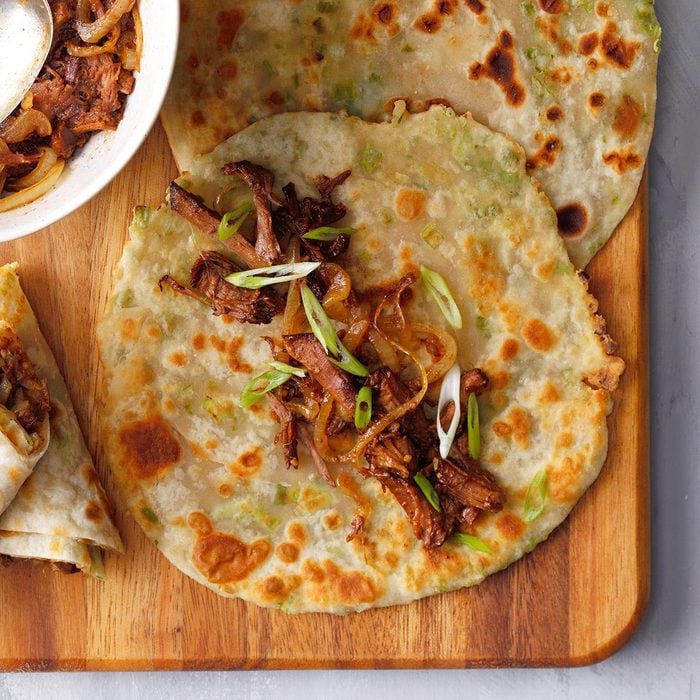
I have a special spot in my heart for green onions (also called scallions) because they are one of the first harbingers of spring!  So try out these Chinese Scallion Pancake Beef Rolls from Taste of Home!  I know the name sounds weird, but you won't regret making these delicious wraps!

Thursday, February 10, 2022

CSA Newsletter for February 2022: Big Plans for the 2022 CSA Season!


Farm Update


Here is Fred on our new cultivating tractor! 
We are so excited to use this to tackle the 
weeds this season! 
Hi everyone!  We hope you're all having an awesome winter!  For us, this time of year is our time to rest and recharge in preparation for another busy farm season.  We usually spend January and February getting our seeds and supplies in order, repairing equipment that has become a little worse for wear, and meeting with folks from the various stores and restaurants we work with to make sure we're all on the same page for the coming year.  January is also the month where I do all of our business tax forms and compliance-related items for the previous fiscal year.  I can't say it's my favorite thing to do, but at least I get it out of the way and don't have to think about it again until next year.  The thing we really do like to do this time of year is plan for the upcoming season!  

Unlike jobs and businesses where there is a steady volume of work year-round, the farm has a natural pause during the cold, dark part of the year.  That allows us to examine all of our systems and habits and determine if we want to keep doing things they way we've previously done them.  Often we make little tweaks, such as rearranging our washing and packing area to remove workflow bottlenecks, planning to hire a few extra part-time people (usually students who don't want a full-time job) to just work mornings and help with the four-day-a-week harvests, or trying a different type of bags or posts or greenhouse plastic.  And sometimes we go all in and make some pretty big changes, like getting our new cultivating tractor!  Keeping the weeds at bay is a constant battle, and the new tractor we got this year will greatly reduce the amount of hand weeding we have to do, which will free us up to stay on top of everything else. It will also decrease our reliance on the black plastic mulch we've used in previous seasons to keep the weeds down, which is a huge win for the sustainability of our farm and environment.

Each winter we contemplate and initiate changes large and small, including in what we decide to grow in the upcoming season. Fred has picked out a few new varieties of veggies for the CSA this year, including some fun winter squashes that we've never grown before, an early variety of red cherry tomato, a new variety of lettuce that is both crispy and flavorful, and poblano peppers. He's also seriously considering getting into growing mushrooms this year, which is kind of an ambitious undertaking. But in February, all things feel possible, and our February selves often take on time-consuming projects that our June selves live to regret. It happens every year, and we are enough acquainted with ourselves to know that we do this, and yet we still do it. To paraphrase the immortal Calvin from the Calvin and Hobbes comics, February is like having a fresh sheet of paper to draw on. But we'll be starting to put our mark on this season soon. As the weather gets milder, we'll transition from planning mode to project mode. In two or three weeks, we'll start the first of our seeds, and Fred will begin making repairs to our heated greenhouse and our unheated hoophouses. You may remember that we lost the plastic from one of our hoophouses in a big wind storm last year, and the frame has been sitting uncovered and skeleton-like all winter. As soon as the weather gets bearable, we'll be able to remedy that situation and get it ready for production again.

We're excited to have hired two full-time farmhands for the upcoming season, Callie and Taran. They'll be coming to town at the beginning of March, and they'll be helping Fred out part time for most of the month before transitioning to full-time at the end of March. By then, there will be enough work between making repairs, starting seeds, managing the lettuce and spinach we have overwintering in the hoophouses, and harvesting the very first greens of the year for a few stores. Speaking of which, you'll start seeing our lettuce and spinach at Greentree Cooperative Grocery in Mt. Pleasant and Argus Farm Stop in Ann Arbor in about a month if you're looking for some delicious, healthy, local, organic veggies! I'll let you all know as soon as we make our first deliveries so you can go snap them up!

If you're wanting to join the CSA for the 2022 season, we're signing people up now! Those of you who have been part of the CSA in previous years already know how delicious the veggies are, how high the quality is, and how long they last in your fridge because they've only been out of the field for a matter of hours when you get them. But I would be remiss if I didn't also make a plug for the sustainability of eating local and organic produce. Because I'm so entrenched in the world of small organic farms, I forget that it doesn't actually go without saying. So here I am, remembering to say it! Eating local and organic reduces your carbon footprint, both because it isn't being shipped from thousands of miles away, and because as a small-scale organic farm, we're not using the same huge, gas-guzzling equipment that the large industrial farms are. Eating organic also helps preserve the environment from the synthetic chemicals that make their way into the soil and waterways around conventional farm operations. And eating local supports your local economy. Every food dollar you spend with a local food producer (whether that's us, a grower at the farmer's market, or your local food co-op) continues to circulate around the community. When you spend your food dollars at a large grocery chain, that money leaves the community and goes into the pockets of people far away. When you shop local, it circulates around to the local coffee shop guy, the server at the restaurant around the corner, the piano teacher, other local food producers, and the fundraiser at the kids' schools. The world has started to feel more disconnected over the last few years, so let's make a bid for community and connectedness. This is a great way to start, while also locking in some great organic food at a much cheaper price than at the big organic chains.

So with that said, here's how you can sign up if you want! The cost for a full share for the season (which includes 14 veggie items per week) is $610, and a half share (which includes 7 items) is $330 at all of our regular drop-offs. The season will be 19 weeks long, and we'll start in mid-June and go until the end of October. If you're interested in what we're growing this year for the CSA, here's a list! We have all of the same drop-off locations as last year, including Alma, Mt. Pleasant, Midland, Lansing, St. Johns, and Okemos. If you're interested in having your share dropped off to your home or workplace and you live within a few miles of where we're already driving, just let me know and I'll send you a quote for delivery. If you do opt for delivery, the more shares we drop off at your address, the more the delivery fee goes down, so it might be a great idea to get a few neighbors in on the fun too! To sign up, just fill out this CSA sign-up form, and I'll get you on our membership list and email you an invoice. Then you can either follow the payment link in the invoice or send us a check in the mail. And if it works better for you, feel free to split up your payments in whatever way makes sense. The final payment will be due by July 1, but however you want to split it up in the meantime works just fine for us.

So here we go into 2022! The last few years have been pretty weird, but let's make this year a great one! I can't wait to see you all in June!

Recipes


Michigan winters are cold and dark, and sadly, there isn't much growing in February.  Some of the first veggies to become available when the weather does become milder are the spinach and kale that we've been overwintering.  It's been biding its time under layers of insulating greenhouse plastic, not really growing, but holding steady.  Once the days get long enough to trigger the plants' growth response, it will start growing again, and once that happens, it won't be long before we're able to harvest and eat it.  In honor of the spinach that is just around the corner, here is a hearty Lentil Spinach Soup with Lemon recipe that will warm you up until the earth wakes back up for spring!

Sunday, April 25, 2021

CSA Newsletter for April 2021


Farm Update


Our spring mix is protected from the severe
cold under plastic low tunnels.  Drip irrigation
waters the lettuce in between the rows so it 
gets just the right amount of water.
Hi everyone!  It’s that time of year when the farm season is really starting to get into full swing!  The days are becoming longer and brighter, and although the change comes in fits and starts, the days are also becoming warmer.  That’s fortunate, because we’ve been spending a lot of hours outside this month!  We’ve been doing a lot of planting and seeding in both the field and greenhouses, lots of weeding, plenty of turning cover crop under into the field, and unusually for spring, quite a lot of irrigation setup.  Fred says this is the driest spring he has ever experienced, so we’ve been moving our irrigation lines around a lot to make sure all of the veggies get enough water.  The dry weather this spring has actually made our lives a little easier on a number of fronts.  Most years, we have to time our field work around when it will actually be dry enough to plant, and before we can plant, each bed requires a certain amount of preparation that also can’t be done when it’s too muddy.  So we’ve had a lot more flexibility to our planting schedule, which has made the allocation of time and labor resources a lot less like a really advanced game of Tetris.  Another way in which the dry spring is beneficial is that it actually helps keep weed pressure down.  When the water for our plants comes not from the sky but from our drip line irrigation, it means that only the plants we want get watered, and the weeds don’t, and we don’t have to spend nearly as much time weeding.  It also makes the process of washing and packing all of the vegetables easier, because everything isn’t spattered with mud when we harvest it, which saves us time in the barn later. 

We are fully into our first round of plantings; Fred and our crew spent a significant amount of time planting in the fields and in the hoophouses, and we were able to get several long beds of seed potatoes into the ground. It’s fascinating to watch the fields go from bare beds and cover crop to completely planted over the course of a few weeks.  Fortunately, all of our recently planted veggies seem to have survived all of the hard freezes we had the last few nights, and it appears that we will be in the clear for a while in terms of freezing temperatures.  The extreme temperatures aren’t good for tender young plants, but we were able to prepare for the cold nights by covering everything with a layer of clear plastic to protect it from the cold winds.  And now that the most severe temps have passed, we are turning over some of our hoophouse production from our overwintered greens and getting them ready for warm season crops like tomatoes, peppers, and zucchini.   

Although people typically think of fall as harvest time, we’ve been harvesting plenty of our early spinach, spring mix, radishes, arugula, and microgreens.  We’ve also been gathering wild ramps, which have a very short season (about three weeks), and they’re so robust and garlicky and delicious that we eat them as often as we can during the short time they’re available.  Alas, we went through the last of our amazing overwintered carrots a few weeks ago, so the next round of newly planted carrots will be ready in June, right around the start of the CSA.  We’ve started delivering to some of the stores we work with, so if you’re wondering where you can get our spring mix, spinach, micros, radishes, or ramps, you can find them at GreenTree Cooperative Grocery in Mt. Pleasant and Argus Farm Stop in Ann Arbor.

And of course, all of this is made possible by our awesome crew!  Carolyn, Katie, Camera, and Alec have been so great to work with this season!  We’ll likely bring on a few more farm workers on a part-time basis for June, July, and August, but for right now, we’re really just amazed at what we can get done with a few really good people!

And summer is fast approaching!  If you wanted to sign up for the CSA and haven’t done it yet, there is still time!  We’re getting pretty close to full, so you’ll want to get signed up in the next few weeks so we can reserve a spot for you.  The cost for a full share is $600 and a half share is $325 at any of our regular drop-offs, and if you’re interested in a quote for home or workplace delivery, just send me an email with the delivery address and I’ll let you know!  I’ve created a form to simplify the sign-up process this year, so if you want to join the CSA this year, just fill out this form!  Just let me know if you have any questions, because we can’t wait to see all of you again in June! 

I've also learned that our blog platform will no longer be emailing the newsletters to subscribers starting in July.  So if you're signed up for the CSA, then I already have your email address on my list, and I'll make sure you continue to get the newsletter once this change occurs.  But if you're not on the 2021 CSA list and you'd still like to get our newsletter updates, or if you'd like to be reminded each spring to sign up for the next CSA season, just fill out this form with your email address!  Thanks so much! 


Recipes


Spring is here, and it’s time to celebrate spinach!  Spinach is one of the early season rock stars each year, and for good reason.  It’s one of the first fresh local veggies available here in Michigan, it’s healthy and nutrient-dense, and it’s delicious!  You can eat it fresh in a salad, or you can sauté it for an easy side dish.  Check out this recipe from Ina Garten for Garlic Sautéed Spinach!  (PS:  If you happen to have ramps available, which are also in season right now, you can substitute them for the garlic.  Just separate the greens from the bulb, and throw the greens into the pan at the same time as the spinach.) Enjoy!

Thursday, January 28, 2021

CSA Newsletter for January: What's New for 2021?


Farm Update


These little baby spinach plants are overwintering
 in the hoophouses!  They have two protective 
layers of clear plastic sheltering them from the wind
and capturing the heat from what little sun we 
have, so they can get a head start for spring!
Hi everyone! Well, here we are in 2021!  When I sat down to write this newsletter, I realized that this month is the tenth anniversary of when we first started Monroe Family Organics.  Back in January 2011, we had just moved back to Fred's hometown of Alma after living in Ohio for several years.  We had bought our house in December of 2010, and we were busy fixing things that needed repair, taking down the previous owner's wallpaper, and putting a fresh coat of paint on all of the walls.  We only had one kid back then, a sweet little 3-month old daughter.  And we were hitting the ground running lining up the cheapest farm equipment we could find, filling out all of the paperwork necessary to do business in the state of Michigan, and deciding how to structure the CSA we planned to launch for the 2011 season.

That was ten years ago, and when I think about how much has changed, I'm amazed at all of the ways we've grown since then. We started out on land we were renting from a family friend, with a capricious borrowed tractor that worked only part of the time, without a barn, electricity, or even running water at the farm.  (Seriously.  For the first several months of that season, we had to drive everything we harvested a half mile up the road and wash it in our friend's barn before the CSA drop-offs.  Our farm labor consisted of Fred and our friend Malcolm, with me helping out at CSA drop-offs and doing all of the farm's communications.

Now as we enter 2021, we're on the same land, but we own it now.  We have three tractors (two old Farmall Cubs and our beloved green tractor that does whatever we need it to do and works all the time, rain, shine, or snow.)  We now have our own beautiful barn with a large, functional wash-pack area.  (It's still not super fancy, but it sure beats the old arrangement!)  We also have seven hoophouses, a heated greenhouse, a deer fence, a driveway we're not always getting stuck in whenever it rains, and a delivery vehicle that we can pack a LOT of veggies into!

Everything continues to grow.  That tiny baby we had when we first started the farm is now 10, and she and her 8- and 5- year old siblings are no strangers to the farm.  They're not really that useful yet for farm work, but they like running around picking wildflowers and playing with the barn cats.  Sometimes I can get them to pull a few weeds.

And this year we also solved a perpetual pain point at the farm, that of getting enough good farm workers each season!  Exactly ten years after we bought the house we still live in, we purchased another house, this time for farm employees and interns for the season.  Our old friend Malcolm who helped us out so much that first season is now a realtor, so we worked with him to buy a cool old house that's just a block from the main downtown area in Alma.  We had found that the fact that we couldn't provide housing was limiting our pool of potential workers to just local folks.  While there have been years where we had a really stellar team of local people, more often than not, it has been really hard to find enough people in our area who want to do our type of work, can do it well, and want to stay all season.  We knew that if we could offer housing, we would be able to hire people from anywhere who would come here specifically to learn how to farm.  And we've actually already hired two people for the season, Katie and Carolyn, who seem like they're going to be a great fit!  So, in a repeat of what I was doing a decade ago at this time, I've spent much of last week scraping the old, dingy wallpaper from the kitchen walls of the new house and repainting, making minor repairs, and generally getting things ready for our summer farm crew.

While most of my farm-related work is indoors now (getting the new house ready, filing all of our year-end business forms, and signing people up for the CSA), Fred is still doing some outdoor farm work.  He has been repairing and modifying farm equipment and building new implements.  He recently spent a few days reinforcing our old potato digger, which is an extremely useful old-school implement that was meant for a much smaller operation than ours, and wasn't designed to be used as extensively as we have over the last few years.  We're also still harvesting a very small amount.  When the weather permits, Fred harvests some of our overwintered carrots, which have been so delicious and sweet!  We currently have four of our hoophouses (also called coldframes) planted with overwintered spinach, lettuce, and green garlic, which we expect to start harvesting the first week of March.  The other three hoophouses will be planted in the next few weeks, and those seeds will eventually become the produce that we harvest in the late spring and for the first weeks of the CSA.

And even though it seems far away now, June will be here before we know it!  If you're interested in signing up for the CSA next year, just fill out this form, and I'll get you all signed up!  If you've never been part of the CSA before, you can check out all the details and learn how it works at our website.  The price will be $600 for a full share and $325 for a half share at our regular drop-offs, and if you're interested in home or workplace delivery, just let me know, and I'll send you a quote!  We'd love to have you in the CSA this year!!!


What's New for 2021?


Every year, Fred eagerly awaits the arrival of his seed catalogs.  Each December, he loves nothing more than to sit by the fire poring over publications from half a dozen seed companies, developing the perfect roster of fruit and vegetable varieties for the coming year.  This year, he actually moved his traditional coffee/fireplace/seed researching process up several weeks, because last year, many of the seed companies kept running out of stock, and we wanted to make sure we could get all of the varieties he wanted to try.  So over the course of November and December, we put in several orders, and our seeds have already started arriving! We especially wanted to make sure we could get the million (yes, million!) seeds we wanted of our favorite carrot variety, so we knew we needed to get started early!

Aside from our ambitious carrot plans, we're also trying a few other new varieties this year!  We've got a few new types of winter squash planned, including the Autumn Frost variety (which is kind of like a Butternut but with a ribbed texture and a dusky orange color, and a really sweet flavor), and Black Futsu (which is pumpkin shaped, and has a sweet, nutty flavor).  We're also going to give some cauliflower a try!  The variety is called Song TJS-65 (I've always wondered how they choose those names), and it is supposed to be a unique type of sprouting cauliflower with great flavor.  We're also bringing back a few crops that we have grown in the past but taken a few years off from, such as pie pumpkins, parsley, and Patty Pan summer squash.  

Another big change is that we will be doing our own onion starts this year!  We've traditionally bought pre-started organic onion plants from a grower in Texas, but we experienced some quality issues the last two years, so we were considering doing it ourselves.  This particular grower has some organic production and some conventional production, and this year he wrote to tell us that his organic field accidentally got sprayed with synthetic chemicals, so the onion plants wouldn't be able to be certified organic.  Because our organic certifier requires us to use organic plant starts, we wouldn't be able to get onions from him this year.  So we're going to do it ourselves!  We're expanding our greenhouse production to accommodate upwards of 30,000 onion plants, and they should be ready to plant in April or May, which is when we usually plant our onions anyway.

This year, we're going to try to get even earlier crops of summer squash, red potatoes, and carrots from the hoophouses, so we can get a meaningful amount of those veggies into the first and second CSA shares.  Hoophouse production gives the plants just enough of a jump on growth so that we can have them a few weeks earlier.  That will allow us to bring an even wider variety of items to you guys for the first few weeks of the CSA!

This time of year, the upcoming season always feels like a big adventure.  We make our plans, get as many ducks in a row as possible, and set the course for the season ahead.  And of course, it doesn't always work out the way we planned.  Last year at this time, the world had only the faintest hint of what was coming, and we couldn't have planned for what 2020 would bring us.  But each year is a chance to start anew, to keep running with the things are are working great, and to make tweaks and try new solutions for the things that aren't.  So here's to 2021!  I, for one, am excited to see what type of adventure this year will be, and I am hopeful that when we all look back next January, we will see how much has changed for the better and how far we've come.