Saturday, June 13, 2015

CSA Newsletter for June 13, 2015

Farm Update

The lettuce really appreciated this great rain we
got yesterday!
Hello everyone! We just had a nice much needed rain, and things are really growing right now! The fields were really dry, but fortunately now they have had a good soaking.  Fred was also happy to get a little break from the field work on Friday morning after an intense week at the farm. It seems we are now winning the fight against the flea beetles, though we did start to see our first cucumber beetles this week, so the respite from insect pressure will likely be brief.  Our potatoes are really looking nice, and things in general look very vibrant.  There are a lot of green strawberries, so we are hoping they dry out quickly after the rain, and that we get warm enough temperatures to ripen them quickly in time for the CSA this week.  This is a very busy time at the farm as the crops are growing quickly, and also because harvesting, planting, and weeding are all at their highest demand.  The next few weeks should be really crazy until Fred’s insane workload tapers off a little bit after the 4th of July.  It is so great to finally have an abundance of fresh veggies and fruit here at home, and we hope you will enjoy it this week as well!


What to Expect in Your Share This Week
If you love green onions as much as I do,
you can look forward to some of these lovely
bunches of goodness as a choice in your share
this week!

At the regular drop-offs:
  • Choice kohlrabi or green onions
  • Choice of chives, cilantro, or baby fennel
  • Choice of spring mix or large-leaf salad mix
  • Choice of head lettuce or spinach
  • Strawberries
  • Choice of kale or chard
  • Choice of bok choy or radishes

We'll also have fennel in the shares this week,
because some of it is getting big enough to harvest!
For home/workplace delivery:

A Share:
Kohlrabi
Cilantro
Spring mix
Head lettuce
Strawberries
Kale
Bok choy

B Share:
Green onions
Chives
Large-leaf salad mix
Spinach
Strawberries
Chard
Radishes

Veggie Spotlight:  Cilantro

Cilantro is often confused with parsley because
the leaves have such a similar look, but the flavor
is totally different.
Also known as coriander or Chinese parsley, cilantro is an herb that is very widely used throughout the world, and is actually thought to be the most widely used spice on the planet.  Here in the U.S. coriander is used to refer to the seeds of the plant (which have kind of an orangy flavor), and cilantro usually refers to the leaf and stem portion, which we most often find bunched in the supermarket.  Cilantro has one of the shortest shelf lives of any fresh herb, so it really is best to get it very fresh.  If you have ever confused it with parsley, you are not alone.  Though the taste is very different, the look is similar and botanically it is closely related to parsley.

If you happen to be one of those people who strongly dislike cilantro, you may have your genes to blame, because studies have shown that there is a strong correlation between genetics and finding it repulsive.  Apparently, the olfactory-sensor sensor gene OR6A2 is strongly linked to a strong repulsion to the aldehydes in cilantro, which give it its flavor.  A few of our teenage workers find it repulsive, as Fred did when he was a teenager, so maybe there is an age component to disliking it as well.

The history of humans and cilantro is long, and it is thought to be cultivated for over 5000 years.  Partly because it has been cultivated for so long, its origin is unclear, but it is thought to have been native to somewhere between the Southern Mediterranean and Southeastern Asia.  It has been found in ancient Egyptian tombs and other ancient burial sites throughout the world.  Coriander also was referenced in the biblical Exodus account (apparently manna had a coriander flavor to it), and in Arabian Nights. 

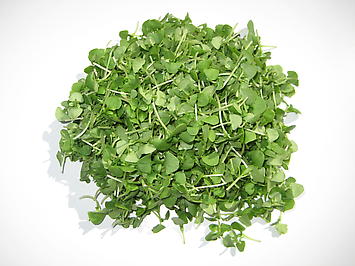
This is what cilantro looks like growing in the
field, long before you see it bunched at the store
or the CSA drop-off.
We grow cilantro every year at the farm, and we love to use it at home during the season.  Usually we grow cilantro by planting the seeds directly into the ground with our field seeder, and then harvesting about 40-50 days later.  This year we have mostly grown it from transplants, starting the seeds in the greenhouse and then transplanting it into the field when the plants were a little bit bigger.  Micro cilantro is also one of the microgreens we grow in the greenhouse.  Since we know we can plant them in the field later as transplants, we usually seed more micro cilantro than we think we will need in the greenhouse, and then transplant what does not sell at the micro size in the field so it can grow nice and tall to a size we can bunch.  It cuts down on weeding significantly, and also cuts the time down in the field to about for weeks instead of 40-50 days. 


Hopefully this leaves you a little more educated about the cilantro you may be eating this week, and you enjoyed learning more about this delicious herb as much as I did! Enjoy!

Recipes

Every year when people first see kohlrabi as one of the choices, it creates quite a stir, just because it looks so weird!  It kind of looks like a UFO, or one of those little green aliens in the claw machine on Toy Story.  But kohlrabi is actually really versatile, so try out one of these 5 Tasty Ways to Prepare Kohlrabi this week!

And if you are super excited to use cilantro in a new way after reading all about it, here are 22 Cilantro Recipes for the Herb's Biggest Fans!  Or if you're one of the cilantro haters, you might just want to ignore this one. :-)

Monday, June 8, 2015

CSA Newsletter for June 8, 2015

Farm Update

Fred harvested the first strawberry of the year a
few days ago, and there should be plenty in a
few days when the CSA starts!
Hello everyone!  It has been a flurry of activity around the farm and around our home office!  With all the craziness getting the CSA up and running, I didn't actually get a real newsletter out this weekend!  But I did want to let all of you know what to expect in your shares for this week at the Midland and East Lansing drop-offs.  (Alma and Mt. Pleasant folks will be starting next week on the 15th and 16th, so stay tuned for next week's newsletter!) So here is the extremely abbreviated CSA newsletter for this week!


What to Expect in Your Share This Week

  • Choice of radishes or bok choy
  • Choice of spring mix or large-leaf salad mix
  • Green onions for everyone!
  • Choice of kale or Swiss chard
  • Strawberries for everyone!
  • Choice of spinach or head lettuce
  • Choice of cilantro, micro basil, or frisee
Apparently the deer are
getting a little too comfortable
at the farm!  This one walked
right up to Keegan last week
and started checking out
his hand.  Yikes!
So if you are at one of the regular drop-offs, these will be the veggies available at the various stations.  If you have a half share, you'll choose one item at each station, and if you have a full share, you'll choose two items at each station.

If you have home/workplace delivery (again, this just applies to the Midland and Lansing area people this week!), here are your choices for your prepacked shares.  Just let me know which option you prefer, and we'll bring it to you!  Or if you don't have a preference, we can just pick out your choices for you.

A Share:
Radishes
Spring mix
Green onions
Kale
Strawberries
Spinach
Cilantro

B Share:
Bok choy
Large-leaf salad mix
Green onions
Kale
Strawberries
Head lettuce
Micro basil

Recipes

Especially if you're new to the CSA, there were probably a few things you saw on the list and thought, "What in the world do I do with that?"  I usually get a lot of questions about the bok choy and frisee at the drop-offs, and our micro basil is new this year for the CSA, so I wanted to give you lots of ideas on how to use these awesome veggies to their best advantage!  Enjoy!

Stir-Fried Bok Choy with Ginger and Garlic:  Bok Choy is great in stir-fries of any type, but this one with ginger and garlic is especially tasty, and who doesn't love a recipe you can make in 10 minutes?  You can prepare it just the way it is in the recipe, or you can serve it over rice.
Frisee Salad with Lardons and Poached Eggs:  Frisee, which is also called French curly endive, is a great addition to salads.  It's kind of like a thin lettuce, but with a slightly more bitter taste.  You can add it in with regular salad greens for a salad with a little more depth, or you can make a salad featuring frisee as the main green, like this recipe.  For the bacon, let me recommend the thick-cut Walsh bacon that they have at LaLonde's Market if you're in Midland; that would be perfect for this recipe!  Also, you can substitute the green onions in your share for the shallots in the recipe, and it would be just as good. :-)

Micro basil is one of those things that you see in restaurants that serve interesting and/or innovative dishes, but you almost never see them in chain restaurants or on people's kitchen tables.  So it's pretty unfamiliar to a lot of people, but we use it a lot at home to fancy up basically anything.  You can sprinkle it on top of pork chops, or salads, or omelets, or stir-fries.  Basically anything where you want a subtle basil flavor, and you want it to look gorgeous!  So go crazy!  Put some of this lovely stuff on your omelet for breakfast, and it will automatically feel fancy.  I can't think of a better way to start the day!

Friday, May 22, 2015

CSA Newsletter for May 2015

Farm Update

Last week the apple trees were in full bloom and looking
gorgeous!  Only time will tell if the trees made it through
the hard freeze we got Wednesday morning.
Hello everyone!  The start of the CSA season is just around the corner!  We'll probably be kicking off the CSA during the second week of June, but we're not 100% certain about that yet, because it largely depends on what the weather does between now and then.  When we do know for sure, we'll send out an email to all the CSA members, and we'll request just a quick response to make sure you got the message.  Then, if I don't hear from you within a few days of the email, I'll give you a call so we make sure you don't miss out on your first week of veggies.  Also, if you are interested in some pre-season veggies or you just want to stop by and say hi, Fred will be at the Midland Farmers Market this Saturday!  We'll have spinach, spring mix, cilantro, and a few other odds and ends available, so come on by and see Fred at the market!
Mary, Daniel, and Aram plant
leeks in the field.
     We've been pretty busy at the farm lately as well!  We finally got our irrigation system finished in the blueberry patch, which turned out to be a bigger project than we thought it would, but we're thrilled to have a reliable water source for the blueberries.  It has been a much drier spring in general, so we may be shaping up for kind of a dry summer as well.  The lack of rain has been pretty beneficial so far; since the fields haven't been as wet as they usually are, we had a lot more leeway as to when we could plant, and we've had less pressure from weeds than we usually do this time of year.  We have had more trouble with flea beetles though, because they prefer to come out in dry weather.  We also had a pretty hard freeze in the wee hours of Wednesday morning, which is really unusual for this time of year.  We covered what veggies we could to insulate them from the cold, but we did sustain some light damage to many crops, and our green beans pretty much got wiped out.  Fred replanted them today, so we'll still have plenty of them this season, but they won't be as early as we had originally hoped.  What was also surprising is that we had quite a bit of damage to the kale, which is normally one of the cold-hardiest things there is.  We definitely didn't see that coming, but it should come back just fine in time for the CSA.  Today, Fred planted the sweet corn along with the second planting of green beans, and he'll be putting in a lot of our warm-season veggies (like tomatoes!) next week.  All in all, the world is coming back to life, and it is so nice to be back into our more active summer rhythm.  See you all in a few weeks!

What to Expect at the First CSA Drop-Off


These little lettuce plants are looking beautiful and vibrant!
These particular lettuces' slightly younger cousins will be
among the choices in your first CSA share.
Before the first drop-off, I always get a lot of questions from CSA newbies about how a drop-off works, and we have a lot of new folks this year!  So in case you were wondering, here is what you can expect at the CSA drop-offs!

The first thing you need to know is when and where your drop-off is happening.  At the Alma drop-off, that will be on Mondays between 5 and 6 PM in the parking lot of His Place, which is right downtown on Superior St.  The Mt. Pleasant drop-off  is on Tuesdays (also 5-6 PM) in the parking lot of Herbs Etc, which is downtown on Broadway.  The main Midland drop-off is on Wednesdays (also 5-6 PM) in the back parking lot of the Eagle Ridge Church on Waldo.  We also have a mini drop-off at the Midland hospital with pre-packed shares.  If you are signed up for that drop-off, you can pick up your share in the seating area behind the Center for Women's health anytime after 4:15.  In previous years, I've had Midland folks ask if they can pick up their shares at the hospital instead of the regular drop-off because the location is more convenient for them.  If you were wondering the same thing, I'm going to have to dash your hopes, because the hospital has regulations that only allow people who work at the hospital to pick up their shares there.  Sorry!  The final drop-off of the week is our East Lansing drop-off, which is on Thursdays from 5-6 PM outside the East Lansing Food Co-Op.  ELFCO is on Northwind Drive, right off of Grand River just a little east of MSU campus.  If you are signed up for home/workplace delivery, I'll be sending out a separate email to you explaining how that will work, so keep an eye on your inboxes!


The blueberry bushes are in bloom,
and the berries themselves should
 be ready for the shares in mid-July.
So once you're at the drop-off, here is how things will be structured.  We'll have a sign-in sheet with everyone's name on it and what type of share you have, and you can just initial next to your name when you arrive.  That's our way of knowing who has been there and who hasn't, because sometimes things get really busy and I can't remember if I've seen a particular person yet.  Once you sign in, there will be two long tables of veggies set up with seven or eight "stations".  It doesn't actually matter which table you choose, because the stations are identical; we mostly just have two tables in order to keep the line moving.  Once you are at the CSA tables, you'll see signs telling what the options are for each of the stations.  For example, at the first station, it might say "Salad Mix or Spinach:  Half share, choose 1.  Full share, choose 2."  So you'll choose either one or two items from that station depending on whether you have a half or a full share, and then you'll move on to the next station, which will have different choices.  By the time you get to the end of the table, you will have made seven or eight different choices of what veggies you want for the week.  We also have a Trading Station at the very end.  If you went to one of the previous stations and weren't crazy about any of the choices, you can actually take one of your items from another station and trade it for something you like better at the Trading Station.  Like, if you didn't really want salad mix or spinach, but you see that there are some extra carrots at the Trading Station, you can just put down your salad mix or spinach there, and take the carrots instead.  It's our way of making sure you don't end up with something you really don't like.


These bins of spinach are headed to the Midland Farmers'
Market tomorrow morning, along with several other
wonderful veggies!  Fred has been out harvesting all evening
so he can head out bright and early in the morning.
So that's the basic structure of a CSA drop-off.  Now for some tips and tricks!

Tip #1:  You'll want to get there a little early for the largest amount of choice, unless you want to avoid the lines, in which case, getting there 15 or 20 minutes into the drop-off is your best bet.  We normally have a big line of people start gathering 15 or 20 minutes before the drop-off, and the reason is this:  at the beginning of the drop-off, all of the choices from all of the stations are still there.  Later in the drop-off, sometimes some of the choices have been snapped up.  We try to anticipate what percentage of people will want which things, but that is a really inexact science.  It's more like educated guesswork.  So if everyone wanted spinach one week, the later people might get there to find that there is only salad mix left at that station.

Tip #2:  If you have a reusable bag or basket, bring it along!  We'll have fairly heavy-duty grocery bags there, but if you have your own bag, that allows us to not go through them as quickly, and it is a lot more eco-friendly.

Tip #3:  If you know you'll have to miss a particular drop-off, you have a few options:  You can have a friend pick up your share for you, or if you let me know by the day before the drop-off, we can actually postpone your share and get you a double share when you get back.  Also, it has happened many times that someone realizes later at night that they completely forgot about the drop-off.  If this happens to you, here is what we usually do in situations like that.  Just send me an email and let me know!  We can't necessarily harvest an extra share for you the following week, but we will likely have some extra veggies left over at the drop-off anyway.  So if you forget to pick up your share one week, if you come by during the second half of the following week's drop-off after the main rush, we'll have a pretty good idea about how much extra we're going to have, and you can take some extra veggies to make up for the ones you missed the week before. :-)

Tip #4:  Most weeks, we'll have some extra non-CSA items available for purchase, such as eggs from our free-range chickens, or extra blueberries, strawberries, etc.  Those will be at the beginning next to the sign in sheet, and if you're interested, it's best to get there early.  We usually sell out of eggs in the first 15 minutes or so, and sometimes a lot faster!

So that's it!  If you have any questions, definitely let me know, and we'll see you at the first drop-off!


Recipes

Thai Curry Soup:  Normally I'm not interested in recipes that will require me to leave the house to pick up ingredients; I usually favor things that I can make from what's in the field and standard in my freezer and pantry.  But this Thai Curry Soup is worth a trip to the store, and it includes spinach and cilantro, both of which are coming out of the fields and coldframes right now!  Try it out!

Grilled Asparagus Salad:  If you are going to be grilling this weekend, give this Grilled Asparagus Salad a try!  It is a great side dish with whatever you a making for your Memorial Day cookout!


Saturday, April 25, 2015

CSA Newsletter for April 2015

Farm Update

We've been harvesting our own spinach already, which was
overwintered under plastic row cover in the coldframes.
Hello everyone!  We are really getting into the season now, with the first of our spring veggies up and ready to harvest!  We've been enjoying our own salad greens, spinach, and radishes at home over the last week, which is so nice after a long dark winter of store produce.  These days, Fred is pretty much working from early morning until he runs out of sunlight, getting things up and running for the main part of the season, although he was able to work at a more leisurely pace during the cold snap we had a few days ago.  CSA sign-ups have been really strong this year, so we only have a few more shares left before we sell out.  If you're interested in signing up this year and haven't done it yet, better let me know soon!  I expect we'll have shares left for the next two weeks or so, and after that we'll begin our waiting list.  In other exciting news, we'll be growing more than just fruits and veggies this year.  We are also expecting our third child in November!  That's pretty much perfect timing, because right now while I'm at the mercy of morning sickness and exhaustion, most of my work is computer-based, and therefore I can do it from the couch.  Then by the time the main season starts, my energy and my ability to keep food down should return, and the baby will be born conveniently after the harvest is (mostly) done for the year and the CSA season has ended.  So when you guys see me in June, I should be sporting the very beginnings of a bump.  We are really looking forward to the beginning of the season, and we can't wait to see everyone!

This Week in Pictures

I always enjoy when news sources offer up "This Week in Pictures" type articles, because you get a collection of poignant, quirky, thought-provoking photos that demonstrate some of the big and small things that humanity has been experiencing this week.  Our version will likely not be that poignant or thought-provoking, but nonetheless, it is a fun sampling of what we've been doing at the farm this week, told in pictures.  Enjoy!

Right:  Trever hand-plants onions and leeks.  Altogether, the guys put in over 10,000 onion, shallot, and leek plants, which should start to be ready for harvest toward the middle of June.


Left:  And for one of our quirky news items, Fred and the guys were startled by a humongous three-foot-long garter snake who was sunning himself in the greenhouse.  He seemed in no hurry to move, even with the guys working right next to him.  I guess he knows a comfortable spot when he sees one. :-)

Right: We're making modifications to our cooler/packing area for this season so that the packing process will flow more smoothly this summer.  On Thursday, Fred took out part of the wall of our indoor packing area so that we can slide bins of veggie from outside to inside easily along a new packing bench he's building.

Left:  Josh harvests some spinach in the coldframe on Thursday.  This particular spinach made its way to the East Lansing Food Co-Op, so if you bought our spinach at ELFCO over the last day or two, this is probably it!

Right:  Our flats of lettuce transplants are ready to plant in the field as soon as the soil is ready for them!  We seeded and raised them in the greenhouse, then we put them outside for a few days to acclimatize them to the outdoor air temperature before planting, and now they are ready to go into the field!

Left:  One of the first French Breakfast radishes emerges from the soil.  We've started harvesting them already, and we'll continue to have them for the next few months.  They'll be among the choices for the first week of the CSA!


Recipes

I am beyond excited about the return of fresh local produce to Michigan after the long winter!  In honor of the spring's first harvestable veggies, here are some recipes for the stars of late April: salad greens, spinach, and radishes!


Avocado, Radish, and Snow Pea Sandwich: Try out this lovely (and easy!) recipe from Real Simple to celebrate the arrival of spring!  And add some spring mix for even more green goodness!


Quick and Easy Sauteed Spinach:  This is one of the many ways we do spinach at our house, and it's one of our go-to favorites for a fast and easy side dish!


Tuesday, March 31, 2015

CSA Newsletter for March 2015

Farm Update


The first microgreens of the year are up, and we've
started harvesting them for a few local restaurants!
 Hello everyone!  A lot has happened since the last newsletter!  All of a sudden it got a little warmer, and we were off and running at the farm.  We have seeded our first transplants in the greenhouse, and they are now growing quickly in the flats. We have two of our coldframes (unheated greenhouses) seeded, and some nice plantings of radishes and greens have already emerged. We are now heading into our third week of selling microgreens to some of our local restaurants, so it is nice to be harvesting again! The microgreens are growing in our heated greenhouse and are doing very well. Over the last week when the ground has been frozen, Fred has been spreading our mix of organic fertilizer.  Yesterday we were actually able to seed in the field for the first time!  This was one of the earliest seeding dates since we started the farm, which is mostly due to the abnormally dry March we've had this year.  Our construction on the new greenhouse is also coming along well, and we only have the heating system and electrical work to finish before it’s completely up and running.  We’re also really excited about the new (used) delivery vehicle we just bought!   It has a refrigeration system in it, which will be really great on those really hot days in July and August! So far CSA membership sign-up has been far ahead of where it was last year at this time, so we will have quite a few new folks this season.  If you haven’t signed up yet, you should go ahead and do that soon! We are also offering the home/workplace delivery option for those of you who may have trouble making it to the drop-offs.   If you have any questions or are interested in signing up, just send us an email at mforganics@yahoo.com!

Spring Seeding


Keegan seeds our flats by
 hand in the greenhouse.
Long before the CSA season begins, all the yummy produce you’ll eventually get in your shares starts its life as seeds.  The first seeding of the year is a huge deal for us!  We usually start planting a lot earlier than most farmers because we want to start harvesting as soon as possible, and there are a number of factors that go into getting the timing just right.  We do two different types of seeding at the farm:  transplants and direct seeding.  The transplants are first seeded into black plastic flats and raised in the greenhouse for the first part of their life.  We usually do this in March, which allows the plants to get a head start on growing long before the fields are warm and dry enough to sustain them.  We fill the flats with greenhouse soil from Morgan’s Composting, then we place the seeds in each individual cell by hand.  After that we water the trays and wait for the seeds to germinate and emerge from the soil.  Once the plants are up, we then take out any double seeded plants and put them into empty cells of the trays, so that are trays are as close as we can get to completely full of plants.  Then, when the weather and soil conditions are right, we transplant the little plants (which are usually about two inches tall by then) into the field.  

We plant the seeds directly into the soil in the
coldframe with our 5-row push seeder.
Then there are the coldframes, in which we seed directly. We usually get two crops per year from the coldframes, the first being the greens and radishes we plant in March.  For these plantings we wait until the nighttime low temperatures are mostly out of the single digits, and then we work our ground with the tractor and apply our organic fertilizers.  We then shape raised beds (mostly by hand) and seed with our 5-row push seeder.  After this, we irrigate with our drip line irrigation system and lay large sheets of perforated clear plastic over the soil and seeds.  We then wait for the seeds to emerge, after which we take the clear plastic off.  The clear plastic helps insulate the seeds, which allows them to germinate well even in the cold weather.

After we plant the seeds in the coldframes, we
cover them with perforated clear plastic to
insulate them from the cold temperatures.
Finally we come to the first field seeding, which is exciting because it is the first big planting (and the one that produces most of the first few weeks of veggies for the CSA)!  The main thing this time of year is to wait until the soil is dry enough on the top couple inches to work with the tractor.  Then we seed cold-tolerant crops like spinach, lettuce, and carrots with our tractor-pulled five row seeder.  After the seeding, we then immediately put up wire hoops by hand and use our tractor-pulled plastic tunnel layer to put the perforated clear plastic over the hoops and bury the edges at the same time. Then we wait until the seeds have emerged and the plants are an inch or two tall, and then remove the plastic.  Usually the first seeding is around the second week of April, this year we actually got the first field seeding into the ground today  This will allow us to get a head start on all the delicious veggies for the CSA!

Although it is still cold out, springtime is always a time of great promise for the farm, when we see the beginnings of what will soon be vibrant growing plants and a great CSA season!

Friday, February 13, 2015

Newsletter for February 2015

Farm Update


Although the winter temperatures are cold, the chickens are
still doing well and enjoying the outdoors.
Hello everyone!  These last few months have been a pretty relaxed time for us as a farm family.  There isn't much we can do while everything is under snow, although Fred did prune a lot of blueberry bushes a few weeks ago when we had a thaw.  Other than that, most of what we do is indoors.  Fred has been working on building some new equipment and ordering supplies, and I have been focusing on spreading the word about the CSA and doing general record-keeping and tax things.  Fred is also teaching a series of classes at Delta College about small-scale farming.  February is pretty chill around here, in more ways than one.  This is also the time of year that Fred gets antsy to get back outside, so he has been keeping a close eye on the weather for any sign of spring.  And although you can't tell by looking outside, spring will be here soon enough, and the real work of the farm will begin for the year

Resolution Reboot:  How Eating More Veggies Can Help You Reach Your Goals


Ah, February.  The snow is on the ground, the sun is covered by clouds, the excitement of having a brand new year has worn off, and if you are like most people, your new years' resolutions have fallen by the wayside.  Losing our resolve before the end of January is kind of a cliché, and part of that is because people often make really ambitious goals for the new year without planning how to meet them, or we make so many goals that we get overwhelmed with all the changes and give up.  But what if we could change one habit that would have a positive spillover into all of the other areas of our lives?  In my opinion, in eating more real food (as in, heavy on the produce, and no stuff made in a lab), you will be better equipped to achieve other goals in your life.

I did a web search on popular new years' resolutions, and here are some of the most common ones I saw:
  • Lose weight
  • Be fit and healthy
  • Spend more time with loved ones
  • Quit smoking
  • Enjoy life to its fullest
  • Get organized
  • Get out of debt
    Either directly or indirectly, eating healthier foods will make all of these goals easier to reach.  Let's elaborate:
    • Lose weight:  This one is almost a no-brainer.  It's pretty much common knowledge that eating more fruits and veggies helps people lose weight, because they contain more nutrition per calorie, because you need fewer calories of these items to feel full, and because they contain lots of fiber, which is extremely good for us.  What is less well known is that because these contain the nutrients and micronutrients that our bodies require, they allow us to feel satisfied and not crave more food to gain satisfaction.  The thing is to stop associating healthy foods with deprivation.  Admittedly, I would not feel very satisfied after eating a raw carrot (I always wondered why Bugs Bunny seems to like them so much).  But I love carrots sauteed in a little olive oil or coconut oil.  It's all in the preparation.
    Jessamine takes a break from her
    busy schedule of playing to shop
    for fresh fruit at  the Green Tree
    Co-op in Mt. Pleasant.
    • Be fit and healthy:  There are two components to this one:  healthy eating and healthy physical activity, and the two feed into one another.  When you are eating healthily, you have the energy you need to go out there any engage in physical activity.  And when you are physically active, your body wants foods that are good for you.  I don't understand all the science behind why it works that way, but I have experienced it often.  That doesn't mean that if you are a marathoner you won't ever want to eat pizza, but you are more likely to want a slice of pizza and a salad, rather than three slices of pizza.  But you're never going to be able to fuel marathon training if you aren't eating your fruits, veggies, healthy proteins, and some good fats.
    • Spend more time with loved ones:  In recent decades, many families have started taking on lots of interesting activities, from soccer leagues, art classes, and school extracurriculars for the kids to card nights, PTA meetings, and book clubs for the grown-ups.  What this often means is that families are eating together less often, and many people set new years' resolutions to remedy this decrease in family time.  Why not make a healthy meal (out of actual ingredients, not from boxes and cans) and eat it together with your family?  You could even get your kids in on it, even if they aren't old enough to cut veggies or measure ingredients yet.  Basically, if they are old enough to stand unaided and not touch a hot stove or sharp implements, they are old enough to "help".  Our two-year-old likes to stand on a chair next to the stove and keep an eye on things as they cook.  She even gets to stir occasionally, and she loves it.  She calls it her "cooking job."  So cooking and eating a meal with your family is a win-win:  You get to spend more time with them during the cooking and eating, you are eating foods that will fuel you and satisfy you, and your kids/spouse/self get to augment your cooking skills.  And, kids are way likelier to eat foods they helped prepare, and hence, more likely to eat things they traditionally haven't liked.
    • All of the other resolutions:  The effect of healthy eating on the other resolutions (quit smoking, live life to its fullest, get out of debt, get organized) is more indirect.  Basically, when you are eating well, your body feels better and you have more energy.  As anyone who has had chronic pain, migraines, or bad morning sickness can tell you, it's hard to get motivated or focus on accomplishing things when you feel awful.  If you are filling up on foods that make your body and mind feel sluggish, you are far less likely to be motivated to begin or stick with any of these resolutions.  Normally, I am a very motivated, get-it-done kind of person.  But both times I was pregnant, I could barely get up off the couch for the entire first trimester.  So I know how this goes.  And when you're eating a bunch of junk food, that's what you're doing.  Between feeling sluggish, generally having more bulk to carry around, and having more physical difficulties, you are directly inhibiting your ability to reach your goals.  
    So let's reboot those new years resolutions, but instead of trying to focus on everything at once, let's just focus on one thing that will make everything else easier.  Make a commitment to eating more real foods, and you'll probably find that your other goals are falling into place with a lot less effort than they used to require.  Okay... ready, set, GO!

    Thursday, January 8, 2015

    CSA Newsletter for January 8, 2015

    Farm Update


    Fred got quite a lot of pruning done in the
    blueberry patch before the snow halted his work.
    Hello and Happy New Year!  We hope you all had a great holiday season!  We have had a good time relaxing, spending time with family, and going on vacation.  Now that we are past the holiday season, we are getting started on the planning and prep work for next growing season.  It is a very different time for the farm and for the family at this time of year.  There is a lot more down time, and most of the farm work is actually done at home on the phone or the computer, rather than in the field.  The main concerns during this time of year are trying to negotiate the best prices on seeds and supplies, and in general finding ways to improve the farm.  Outside the snow stayed away for most of December, so Fred was able to put up most of the frame of the new greenhouse we’re constructing, as well as make it through almost half the pruning on the blueberries.   Now the ground is covered in a blanket of snow and the farm is resting as well.  Our chickens are still wintering at Fred’s parents and our farm dog, Josie, has moved back to our house for the winter.  The pigs are in the freezer and make a tasty appearance on our table almost every day.  We are also fortunately still able to eat mostly our own veggies, fruit, and meat since we have a lot preserved or in cold storage. We are also able to slow down and spend more time pursuing other personal interests and spending more time as a family. 

    If you want to sign up for the 2015 season and haven’t done it yet, now is the time! In addition to our normal CSA program we will be piloting a home/office delivery option this year for our normal delivery routes through the following areas: Alma, Breckenridge, St. Louis, Ashley, Lansing, East Lansing, Okemos, Riverdale, Elwell, Ithaca, Mt. Pleasant, Winn, Midland, and Shepherd.  Discounts (sometimes deep discounts) can apply to deliveries where there are multiple customers, like at a workplace or neighborhood.  The more shares at a location, the greater the discount for everyone at that location.  Shares will come pre-bagged, and there will be a choice between two different selections of produce that will be the same as what is available at our normal CSA drop-offs. There is a premium price for this delivery service above the cost of a normal share but it depends on where you are located and how many shares are picked up at your location. The home delivery option will be one more way that we can make our high quality produce available to more people, especially for those who find it difficult to get to the normal drop-offs. If you are interested in finding out more about the home delivery option, email us with your location or address and any questions you have, or you can give us a call at 517-896-6884.  We’re excited to add this newest option for getting your veggies, so just let us know if you’re interested!


    Choosing Seed Varieties to Bring You the Very Best Veggies

    One of the varieties we'll be
    growing this year is an heirloom
    bean variety called Dragon's
    Tongue.
    As winter sets in it signals another season at the farm, the planning season.  One of the most important decisions we make this time of year is the choice of our veggie varieties, and Fred takes these decisions very seriously.  He spends many hours with his seed catalogues open around him, poring over them with as much enthusiasm as I displayed as a child poring over the toy section of my Grandma’s big Sears catalogue each December.  This year he has diligently chosen about 100 varieties, taking into account seed cost, yield, disease and insect resistance, appearance, and most of all the flavor, and ensuring that none of the seeds are GMO or chemically treated.  You can probably tell by the taste, but we focus a lot on the quality and flavor of our veggies, and we treat that as a top priority at the farm.  There are a lot of things that go into attaining better flavor, such as how and when we harvest, the fact that we harvest most things the same day you pick it up, that we use natural fertilizer and pay close attention to the needs of our soil, and of course the natural characteristics of the varieties we choose to grow. 


    Every year new varieties come out that are promoted as being some type of improvement over other varieties that existed before.  Fortunately, unlike row crops, the vast majority of new varieties of veggies, fruit, and herbs are created using traditional breeding methods and are non-GMO.  While the new varieties came out using traditional hybridization breeding techniques they almost always focused on yield, ability to last longer during shipping, and disease resistance instead of flavor.  This meant that things like tomatoes got to be harder and blander as the focus was more on shipping it than eating it.  This led to the movement to grow heirloom varieties of vegetables as consumers, gardeners, chefs, and small farmers woke up to the superior taste of some of these old varieties. 

    Another variety we'll be growing
    for the first time this year is these
    Nova grape tomatoes, which will
    go into our cherry tomato mix.
    However as great as some of these old varieties tasted there are very good reasons that larger producers chose not to grow these varieties. Most of those old varieties yield far less (most heirloom tomatoes we have grown yield only a 1/3 to ½ the yield of hybrids), and the disease resistance was much weaker, making the farmer more vulnerable to crop damage, highly variable vegetable quality, or more losses.  We, as many small diversified farms have, decided that our best bet was to sacrifice some reliability and total yield in favor of better taste and texture.  An example would be our new gold beet variety we grew last year that had superior taste to any other beet we know, but does not yield nearly as well as some of the red varieties that have had more breeding focus. However, we might not have to choose too much longer between ease of growing and quality for eating.  As consumers have become more educated and enthusiastic about their food over the last decade, modern breeders have finally started to recognize the economic benefits to be gained in having flavor being a selling point for their new offerings.  This year we will be growing some new hybrid varieties of tomatoes that are meant to replicate many different heirlooms in taste and texture but with much better disease resistance and yield potential.  For once, these new varieties were not bred to ship well but to taste great!  This is good news for us as farmers, especially because being organic, we do not have the same arsenal of sprays as conventional growers have to protect the weaker heirloom plants against disease.  It is also better for the consumer, because when the cost to produce these superior crops goes down, they will hopefully be less expensive and more widely available wherever people buy produce.  Fred has also been seeing more new varieties come out this year that tout flavor as one of their main attributes even from companies that usually are more production focused.  Also, going back to the gold beet example, even though this new variety still yields less than the equivalent red beet, last year’s gold beet introduction is about three to four times more productive than the gold variety that was available 12 years ago when Fred first started as a grower.

    We are already excited about what we will be growing this next year, both the new tastes and flavors and the good old standbys.  This trend indicates a positive outlook for the future, as we as a society start to turn our attention not only to healthy eating, but also to truly good eating using high quality ingredients.  At this time of year, when we are better rested without the day to day craziness of running the farm, there is a lot of optimism and excitement as we look forward to the possibilities of what the next farm season holds.