Saturday, August 2, 2014

CSA Newsletter for August 2, 2014

Farm Update

The corn is just waiting for some good warm days in order to be
ready for the drop-off!
 Hi everyone!  Things are going pretty well at the farm!  The cool-weather veggies continue to do well, and the warm-weather crops continue to just hang out and wait for enough heat to ripen.  There are tons of tomatoes on the vine, but due to the cool weather, they probably won't be ready for another week or so.  It's a similar story with the watermelons and sweet corn, but hopefully we'll be bringing them all soon!  One thing that we will have this week, though, are the very first apples!  We'll have some Transparents, which are the first variety of apples to ripen each year.  They're a little more tart and a little more intense than your standard apple, so they are great for applesauce and pies.  We hope you're enjoying eating according to the season as much as we do!

What to Expect in This Week's Share
  • Choice between carrots and transparent apples
    We'll have plenty of green beans
    again this week!
  • Choice between beans and broccoli
  • Potatoes for everyone!
  • Choice between cabbage and beets
  • Choice between heirloom turnips, kale, or chard
  • Choice between large salad mix and summer squash
  • Choice between basil, bok choy, and kohlrabi
  • Choice between shallots, onion, or garlic

Where We've Been and Where We're Going

On Thursday afternoon when I looked at my roster of CSA newsletter topics that I brainstormed several months ago, I came to the topic I had planned for this week, which was about the many aspects of sustainability that are important to us at the farm.  We had done a similar article back in 2011, so I trolled through the newsletter archives to find it and see what I wrote when I was a newbie at farmwife-ing, mothering, office managing, newsletter writing, and basically everything that has become second nature to me now.  I never did find that article.  But after skimming through the first two years of our farm experience over the course of about 15 minutes, I was overcome with a sense of both change and continuity, and a little bit of nostalgia.  I decided to postpone the original article (don't worry, it's still coming!) and talk about the (fairly short) history of the farm.  So here it is:  The Monroe Family Organics Timeline.

Some really beautiful dark clouds at the farm last week.
December 29, 2010:  We pack up our household in Ohio and our two-month-old daughter and make the trek up to Alma, Fred's hometown, where we've just purchased a house and rented some farmland, to finally realize our dream of owning our own farm.

January and February 2011:  Fred hits the ground running getting the appropriate business permits, the rights to our farm name, a business bank account, a small business loan from his uncle (thanks, Uncle Mark!).  Michele gets signed up to do some substitute teaching, because our family now has no income.  She also timidly tries her hand at marketing, with mixed results.

Spring 2011:  Fred starts planning, planting, and getting the fields ready to produce veggies.  We do research about different CSA structures, brainstorm possible problems and complaints, and generally try to come up with the best CSA model we can.  We didn't have as many people sign up as we had originally hoped (or need in order to not go broke in our first season), so Fred contacts some potential wholesale buyers, and the (unintended) wholesale half of the business is born.

Summer 2011:  We kick off the first year of the CSA!  We establish the three original drop-offs, work through a lot of the kinks, and develop relationships with the CSA members and small wholesale accounts.  Fred does all the field work with just himself and one other employee, as well as all the record-keeping and article-writing.  Michele takes care of the few-month-old baby, continues to establish the household, helps at the CSA drop-offs, and edits the newsletters.  

Fall 2011:  We wind down our first season and evaluate what changes need to be made for next year.  Michele completes her first marathon, and a few days later, we find out that we have baby number 2 on the way.  We realize that we really need to streamline and get more help for 2012, and that Michele needs to take all of the office-related things off of Fred's shoulders.

June 2012:  We kick off our second CSA season, adding a new drop-off at the Midland hospital and a few new wholesale accounts.  Michele takes on all the record-keeping, payroll, newsletter, etc, and begins to develop systems to manage all of her new roles.  The farm is growing extremely quickly, and we are trying to put infrastructure in place so we can handle all the demand.  We're both glad to be back into the season, and we are anxiously making plans for the birth of our second daughter, who is due in mid-July, but who is actually expected by the end of June.  Surveying the insane workload that Fred has in the field (literally 100 hours a week for both the last two weeks of June), Michele fears that if the baby is born on a drop-off day, he's just not going to be able to be there, because no one else can replace Fred for even a few hours.

June 25, 2012:  Michele goes into labor at 1:30 on Monday morning, and has Jessamine around 5:30 AM.  Fortunately, Fred was able to be there since it was the middle of the night, and he got to be with his new little girl for 45 minutes before having to get out to the field to start the harvest for the Alma drop-off.  Michele spends the next few days in the hospital, holding and feeding little Jessamine, trying to keep her end of the farm running from a laptop in a hospital bed, and trying not to notice the pitying looks from the nurses because her husband has been making only short appearances when it is either too early or too late for field work.  Meanwhile, Fred is experiencing trial by fire as the farm is experiencing some major growing pains.  He leaves the farm only when he can no longer see anything, picks Jane up at his parents, stops by the hospital to see Jessamine and Michele, and returns home to fall into bed for a few hours, until he has to do it all again the next day.  It goes on like this for about a week, because after a very brief release from the hospital, Jessamine is readmitted due to severe jaundice until the following Sunday night.
Fred puts the apples on the grading
table, which rolls them around so he
can more easily see if an apple has
blemishes, and sort them accordingly.


July-October, 2012:  We spend the rest of the season trying to keep our heads above water.  Fred is still working insane hours, Michele finds that important management things are slipping through the cracks despite her best efforts, and no one is getting much sleep.  We have a newborn and an almost-two-year-old who is acting out because she isn't sure what to make of the tiny usurper who has just entered the household. (Disclaimer:  Fred remembers the 2012 season a lot differently than I do.  He remembers primarily the growth the farm experienced, whereas I primarily remember not being able to keep up with everything.  So it was probably somewhere in the middle.)

Fall and Winter 2012:  We spend the off-season trying to keep the farm moving forward and improving our systems, because the last season was completely unsustainable.  After just barely keeping our heads above water all season, we do a combination of draining some of said proverbial water, and learning how to swim more effectively. 

Summer and fall 2013:  We enter the 2013 season ready to get to work.  We have a little more infrastructure in place that Fred created the previous year, but there are still a lot of things we need in order to make things run really smoothly at the farm.  The girls are a year older and therefore a year easier, so in general, it is a much smoother year than the year before.  Michele has a little more practice at running the office, Fred has plenty of help in the field, and everyone is getting a full night of sleep each night.  Now all we need is a tractor that doesn't break down at really inopportune times!  In September, after most of our summer help leaves, Michele joins Fred working in the fields Monday-Thursday, learns to appreciate all of the effort that occurs on the field side of things, and builds awesome arm muscles lifting heavy bins of veggies.

Winter 2013-2014:  We spend the winter in a really relaxed fashion, hanging out by the fire, spending time with the girls, and doing some renovation projects around the house.  Fred is chomping at the bit to get out and do some work, but everything is under a few feet of snow, so he chops a bunch of firewood and designs new farm implements instead.  He also gets his new tractor, which he proudly uses to shovel snow out of neighborhood driveways.

Spring and Summer 2014:  This is absolutely the best season yet. We've hit our stride, developed our systems, and gotten most of the tools we need for the job.  We also have enough help in the fields to get things done.  Our girls are now three and two, so they are at an age where they can entertain themselves for twenty minutes at a time without hurting themselves or destroying anything.  Michele has stopped being afraid of marketing, figured out how to do her tasks more efficiently, and also has more time to do them now that the girls are more independent.  As for the CSA, we've added our East Lansing and Saginaw-Bay City drop-offs this year.  The CSA has gotten a lot bigger, which is nice, and we are trying to figure out how to know everyone by name like we did the first year.  All in all, it is a good season, and we've finally gotten into a more sustainable groove.

...And beyond:  Who knows?  We're tossing around several ideas for the future, such as a Flint drop-off, a home delivery option for the CSA, more kids, and working on an organic farm in the South of France in January.  We've had a lot of ups and downs in the last few years, but overall, it is a good life.  We really believe in the importance of the work we're doing, we love having such a seasonality to our lifestyle (not to mention an abundance of awesome food), and we love being so connected to our family and the community.  We're living according to our priorities, and in the end, isn't that what everyone wants to be able to say about the road they've been travelling?  So here's to the adventures we've had so far, and here's to the road ahead!

Recipes
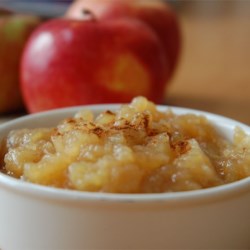
Try out this easy applesauce recipe!
I am so thrilled that it is the beginning of apple season!  Since Transparents are a little more tart, making applesauce is a great thing to do with them.  Here is a really easy applesauce recipe to help you on your way!

Grilled Potatoes!  Yum!
Also, most people already have a favorite thing to do with potatoes.  But if you're looking to try something new with an old favorite, check out this Grilled Potatoes recipe from Paula Deen.  (I know she gets a bad rap for using plenty of butter, but these potatoes are totally delicious, and butter is not as bad for you as we've been told for the last few decades.  Just saying.)  Enjoy!

Sunday, July 27, 2014

CSA Newsletter for July 27, 2014

Farm Update

We've started harvesting the very
first ripe cherry tomatoes!  They'll
probably be ready for the shares
in about two weeks.
 Hello everyone!  It was a busy week at the farm, as we have started our fall plantings. We have also started to irrigate because our fields have gradually started to dry out.  The blueberry bushes are not producing quite as many berries as we had hoped, although the berries are much larger this year.  Our heavy pruning this past winter sacrificed some of this year’s yield to make the bushes healthier and better for the coming years.  The cool season crops continue to do very well although the warm season crops are really taking their time.  I think this is the latest year we’ve had on things like beans and tomatoes.  The cabbage worms are coming on strong but we are hoping the weekend rains will help out a little in getting rid of them.  This weekend we sprayed our diatomaceous earth (a type of clay that creates miniscule cuts on soft-bodied words) and a bacteria that infects the worms but is completely harmless to humans.  Weeding has continued to get easier and we are now past the worst of our weed pressure. The pigs are doing very well and have made for themselves a new mud pit.  We have been loving the great meals we have been having from the field lately.  It is a great time of year to eat at our house, and we hope it is at yours too!


We'll have this year's first green
beans in the shares this week!

What to Expect in This Week's Share
  • Choice of blueberries or snap beans
  • Choice of beets, cabbage, or summer squash
  • Choice of frisee, basil, or cucumbers
  • Choice of 2 onions or 2 garlic (or you can mix and match!)
  • Choice of bok choy, chard, or kale
  • Choice of carrots or potatoes
  • Choice of salad mix or head lettuce


Veggie Spotlight:  Basil

Every summer we look forward to the strong flavor of our fresh basil.  Lately we have been cooking a lot with it, and we have a couple new kinds this year as well.  Basil originated in India where its cultivation began around 5,000 years ago.  It was also referenced in ancient Egyptian writings about 1000 years later.  Basil was well known in most of Europe for centuries but it did not arrive in Britain until the 16th century.  After its appearance in Britain it came to the colonies in North America in short time.  Basil’s place in human history is one that is steeped in folklore and religious traditions.  It has played a role in many Christian, Jewish, and Hindu ceremonies and traditions over its several thousand year history.  It has even been associated with the devil, and one of the most famous pieces of folklore was the belief in Europe around the 1500s that smelling basil would produce scorpions in the brain, a belief which was upheld by many physicians of the time.  Incidentally, in Africa around the same era, they believed it would ward away scorpions.  I guess we will let you folks try smelling it this week and see who’s right! 
Basil growing in our field.
Basil has been used heavily in traditional medicine, and was also used in a lot of burial ceremonies of many different people groups over its several thousand year history.  Today we know that it does have great antiviral and antimicrobial properties.  Because it has antimicrobial properties, it can make fresh foods (like salads) safer to eat.  This is more usually important in some of the really hot areas of the world, where there is usually more bacteria in the water and less desirable sanitation practices.

When it comes to our farm, in our fields we grow basil several ways.  Early in the season, we start the seeds in the greenhouse, and then put these transplants out in our coldframes and field to get a jump on the season.  In June/ July we often seed directly into the field with our 5-row seeder after germination temperatures are more ideal.  As the plants grow, we harvest the sprigs off the plants and cut off the flowering heads to keep the plants producing new sprigs. 

At home we have loved putting our basil in fresh salads, stuffed in grilled chicken, in pasta sauces, in curry dishes, on grilled fish (we use the lemon basil for fish dishes), and on omelets.  This year we have 3 different types: Thai basil, Lemon basil (an heirloom variety), and Genovese basil, which is the type you commonly see at the grocery store.  We will have some of each type at the drop-offs this week, and the Lemon and Thai basils will be labeled if you want to try them.  We really love basil and are excited for this limited time of year that it is available.  Enjoy!


Recipes

This pesto looks as lovely as it
is delicious!
For as much of a basil enthusiast as I am, it is kind of shameful to admit that I have never made pesto.  Fred has made it, and I love it on everything from pasta to sandwiches to chicken, but I have not actually made it myself.  But with this easy recipe, I think this will be the week that I add pesto making to my list of stuff I know how to do.
Pesto Chicken Tart

And once you've made your pesto (or if you decide to keep your basil in leaf form), check out these 10 Delicious Ways to Use a Bunch of Basil.  I am particularly excited about this Pesto Chicken Tart recipe!

Sunday, July 20, 2014

Newsletter for July 20, 2014

Farm Update

The piggies seem to be getting bigger every day!
Hi everyone!  After a Septemberish week, it looks like the weather will once again get back to normal summer weather.  Our cool season crops (mostly greens and root vegetables) have done well, but it is time for some of the warm weather crops to catch up!  Our peppers, tomatoes and watermelon have not grown much due to the cooler weather, but they will likely take off this week.  Fortunately, most crops have avoided disease as we have been applying our biofungicide, Bacillus subtilus, that is a predator of fungal pathogens.  These helpful bacteria have protected our plants through conditions that promote high disease pressure very well.  Only the potatoes seem to really have had significant disease issues.  The pigs have had a good time lately, and seem to be noticeably bigger every day when Fred goes to see them. 
There will be plenty of lovely
beets in the shares this week!
Our guys have continued to make a lot of headway against our weed troubles, and the fields seem to be under control now after a few weeks of very high weed pressure.  We have started to see some of the summer insects start to come out, which to this point had been somewhat delayed because of the cool weather. Now the fight will be less against weeds and more against the cabbage worms and cucumber beetles in the coming weeks.  The frogs, snakes, and toads have become quite numerous around the farm, and hopefully they will make a small dent in the insect population as well.  


What to Expect in This Week's Share
  • Choice of salad mix or head lettuce
  • Choice of broccoli, kale, or chard
  • Choice of carrots or potatoes
  • Choice of summer squash, basil, or kohlrabi (and maybe cucumbers too)
  • Choice of cabbage or beets
  • Choice of blueberries or red potatoes
  • Choice or garlic or onion

Local Farm Products and Where to Find Them

Here are rows lettuce growing in the
fields.  Soon, they will be in the shares
as salad mix and head lettuce.
It's no secret that at our house, we eat mostly local, mostly organically grown, and always high-quality foods (aside from the occasional take-out pizza).  People often ask me where we source such foods, so here it is:  a list of where you can find the local farm products you're looking for!  I have not personally worked with all of these farms, but I either have gotten things from them before, researched them and found them trustworthy, or had them recommended to me by friends who have worked with them.

If you're looking for meats or eggs, check out:

  • GCC Organics (formerly Garrett Cattle Company) in Mt. Pleasant.  They're certified organic, all of their animals are free-range, and they're also super nice people!  Try them out  if you're looking for beef, poultry, or eggs.
  • Livingston Farms in Saint Johns.  They're not certified organic, but their cows are grass-fed and not given any hormones or other additives.  They also offer mint, mint products, and maple syrup.
  • Graham's Organics in Rosebush (north of Mt. Pleasant).  They're certified organic, and they offer grass-fed beef, and free-range chicken, turkey, and eggs, and spelt flour.  They're also a great source for organic animal feed if you're interested in raising your own animals!
If you're looking for raw honey or maple syrup, check out:
  • Risk's Apiary and Honey House in Laingsburg.  They use
    The snakes have been plentiful around the farm lately,
    which is good, because they help us control our insect
    and rodent population.
    organic beekeeping methods and are really knowledgeable about their craft!  Also, if you're in the East Lansing area, you can also get their honey at ELFCO, the East Lansing Food Co-Op.  
  • Doodle's Sugarbush in Blanchard.  They produce maple syrup and other maple products, including maple sugar and even maple coffee!  (I think I'm going to have to try that!)
If you're looking for raw milk, joining a cow share program may be for you!  Because it is illegal to sell unpasteurized milk, some farms are able to still offer it in the form of cow share programs.  Basically, a family signs up to own part of a cow, who lives at the farm and is milked by the farmer.  Then, the family comes to the farm (usually on a weekly basis) to pick up their milk.  There are not many of these in the mid-Michigan area because it's a lot of work and a lot of regulation, but here are some:
  • Thomas's Organic Creamery in Henderson.  They're certified organic, and they offer a cow share program, as well as yogurt and other dairy products.  It's a little bit of a hike for most of us, but this could be a great resource for those of you in the Lansing area.
  • Glen Mast in Blanchard.  We're part of his cow share program, and we have always been really pleased with it!  He's not certified organic, but he uses organic practices, and he's happy to show you how he feeds/pastures/raises all of his animals.  I'm not sure how many new members he's able to take, but if you have any questions or want details about the program, just ask us, because we know all about how it works!  He's Amish, so he doesn't have a website or a phone number, but if you're interested, I can get you his address so you can contact him the old-fashioned way.

Recipes
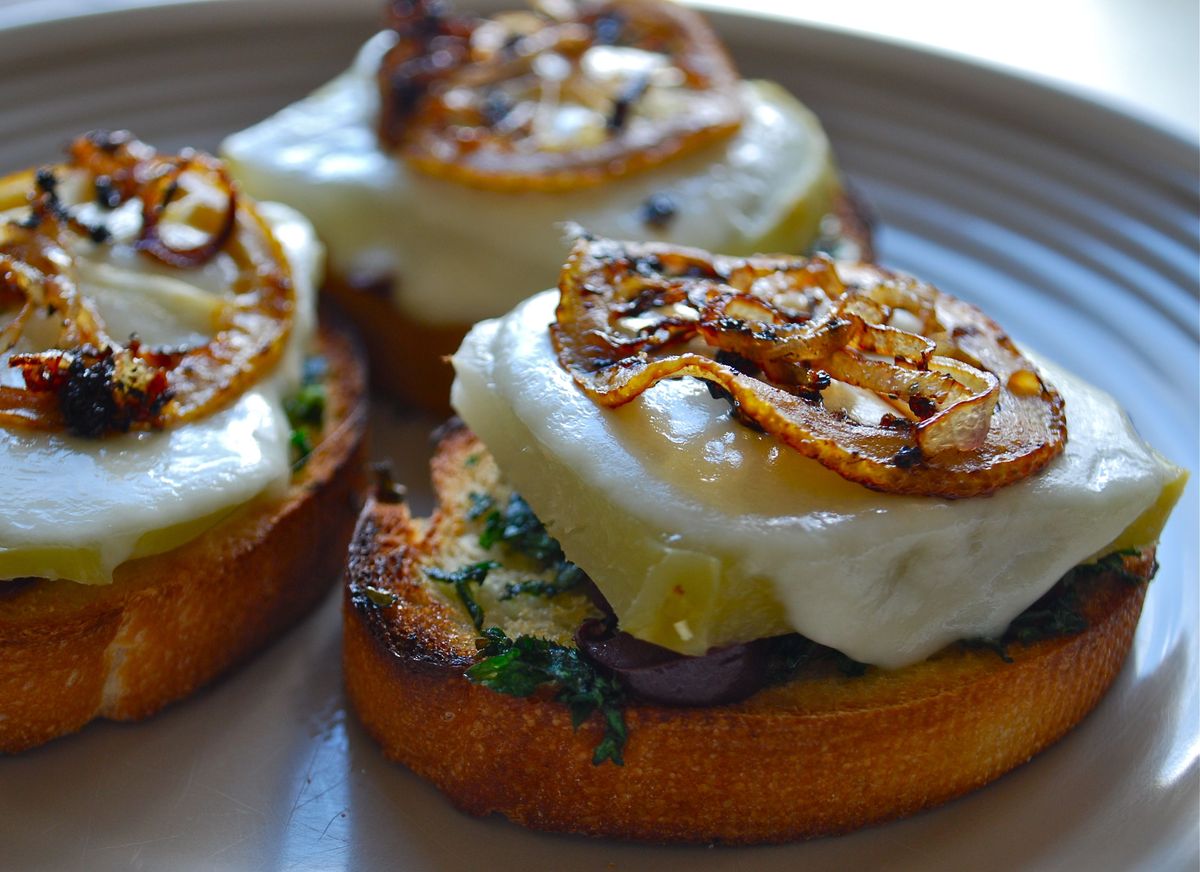
Fresh Mozzarella and Roasted
Kohlrabi Crostini with
Crispy Lemons and Shallots
One of the more common questions I get is, "What do you do with kohlrabi?"  And fortunately, here is a Huffington Post article that answers just that question!  Here are 18 great ideas for kohlrabi, and seriously, some of these made me want to break out my kohlrabi stash and start cooking immediately.

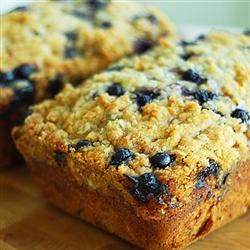
Blueberry Zucchini Bread!  It kind of
makes me want to have people
over for brunch!
There will be plenty of blueberries and summer squash in the shares this week, so here is a recipe for Blueberry Zucchini Bread!  What a great combination!

Sunday, July 13, 2014

CSA Newsletter for July 13, 2014

Farm Update

The guys have harvested the garlic,
and now it is drying and getting ready
to go in the shares in a few weeks.
Hi everyone!  This last week has been pretty wet, and it looks like the summer might be cooler and wetter than usual.  With it comes to how the crops fare in weather like this, some do better and some do worse.  Our weed pressure has been very intense and Fred and the guys were finally able to make a lot of progress at taking them down. We also have turned under a lot of old plantings, and will be replanting large fall plantings here in a couple weeks. The blueberries are doing very well, and because of all the pruning Fred did during the winter and also because of all the rain, they are a lot bigger than in past years.  The leaf and stem growth on the bushes that produces next year’s crop is also very large already, so our 2015 blueberry crop should be quite the bumper crop, especially with our new well.  Our broccoli, beets, and our cabbage have been doing great as well, as this type of weather is really good for them.  The potatoes have struggled a little with disease and insects and probably would have done better with a dryer year.  Our tomatoes are looking healthy but the crop will come a little later than usual, probably more similar to last year.  The peppers are not doing well because they really do need more hot days to thrive. So far the beans are looking good and should be plentiful in the next week or two, as long as there are no disease issues. The pigs have really had a good time, and have enjoyed the wet weather that brings tasty night crawlers and frogs.  They are also an animal that thrives much better with the cooler temperatures.  In general the cooler weather has been more of a benefit than a detriment, but it would be good to have a few dryer days in the mix as well to help deter weeds and plant diseases. 

What to Expect in This Week's Share
Our dog, Josie, goes out to visit her piggy frenemies, with whom
she will have a love/hate thing going on until October, when
the pigs will go on to the great beyond (and into our freezer).
  • Choice of beets, fennel, or gold turnips
  • Choice of carrots and either cucumbers or summer quash (out of the cucumbers and squash, we're not sure which one we're going to have yet)
  • Choice of potatoes or blueberries
  • Choice of broccoli or salad mix
  • Choice of kale, chard, or cabbage
  • Choice of leeks or frisée
  • Choice of onion or basil

Veggie Spotlight: Broccoli

     Both this season and last season have been great years on the farm for our broccoli, as field conditions have been more ideal than usual.  Broccoli really is a cool weather crop that benefits greatly from a lot soil moisture, especially around the time the heads start to develop. 
It is suspected that early broccoli probably looked more like this
broccolini than the
broccoli we eat today.
     The historical beginnings of broccoli were more similar to the broccoli raab or broccolini that you may have seen in better restaurants, or every now and then at grocery stores with great produce sections.  The first cultivated broccoli was probably first grown by the Etruscans by the 5th century BC (a more exact date is hard to track down due to the lack of written history from this group of people) who inhabited a region in the Italian peninsula.  As the Romans overtook and absorbed this group of people they also inherited the broccoli and continued its development.  Broccoli was not very widespread in cultivation in the rest of Europe until later in the 17th and 18th centuries.  Part of this is likely due to the lack of adaptability and low edible yield of the earlier broccolis. Italian immigrants in the 18th century eventually brought the more modern broccoli to the United States.  After it arrived in the states, the breeding work on broccoli has vastly improved this crop in yield, adaptability to other growing regions, and better palatability.  Over the course of the 20th century, broccoli made an extremely rapid rise in popularity and is now considered one of the more important common vegetables.
Ancient broccoli may also have looked
more like this broccoli raab than modern
broccoli.
     Broccoli is popular for good reason.  Besides being a delicious vegetable, it is also one of the healthiest as well, and is considered a superfood.  With as much calcium as milk per ounce it is also an excellent source of vitamin A among many other nutrients, and may also help fight cancer.  The chemical sulforaphane (also found in cabbage and kale) turns on genes that fight cancer and turn off ones that may let it increase. However, the anticancer properties are not fully understood and it is likely that more substances are involved than just sulforaphane.  Interestingly, studies showing that people with regular broccoli intake are less prone to cancer also show that people who smoke and also eat broccoli do not have any added protection.
     For the last two years, the broccoli on our farm has been doing very well because the seasons have been relatively cool with adequate rainfall.  We also made changes to our soil fertility and seed variety after our first year’s crop was disappointing.  The variety we grow is called Gypsy, which is very well adapted to our climate and has the ability to produce large heads.  We start all our broccoli in the greenhouse, where we seed flats of transplants and wait until they are 4-5 weeks old before transplanting them out in the field in black plastic.  As the season progresses, we usually start planting into bare soil, as the need to protect the leaves from soil splash during the cool wet weather of spring diminishes.  This is because as we get into the summer the conditions naturally become dryer and warmer, lowering the chance of disease. From there we let it grow until the heads are at a maximum size before flowering, and then we harvest them. 
And here is the modern broccoli that we all know and love!
Many people don't realize that you can also eat the leaves of the
broccoli plant.  We usually include broccoli leaf in our cooking
greens mix in the fall, and you cook it just like you would cook kale.
After harvest, if conditions are good we may get a lot of large side shoots as well, which we band together.  In the summer, green cabbage worms become more of a nuisance, and we try to control them with a bacteria called Bacillus thuringiensis, which infects that type of worm but is completely harmless to people.  We are very diligent about preventing and attacking cabbage worms, and we also wash the broccoli well, but it is always possible that one or two may sneak through anyway.  If you are concerned about them, you could try soaking your broccoli in salt water before you eat it, which was a common practice when all home gardening was done organically.  
So when you eat your delicious and good-for-you broccoli this week, you can do it with the knowledge that several months of work at the farm, and several thousand years of chance and choice have gone into putting it on your plate.  Enjoy!

Recipes

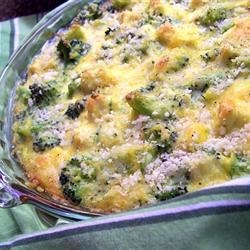
Broccoli Chicken Divan
Restaurant Style Beef and Broccoli
Check out this recipe for Broccoli Chicken Divan, which is (mostly) good-for-you comfort food at its best.  Or if you are in the mood for Chinese food, try this Restaurant Style Beef and Broccoli.

Sunday, July 6, 2014

CSA Newsletter for July 6, 2014

Farm Update

Hi everyone!  Things are slowing down a little bit at the farm, and we had a nice chance to catch our breath this weekend.  We just got back from a few days at Michele's parents house, rejuvenated and ready to get back to work.  It has been kind of a crazy few weeks, not least because Fred's dad had an unexpected stroke on Monday.  We were at the hospital with him, so we had Joe and Nate run the drop-off (Thanks, guys!), and we've spent the entire week trying to catch up.  But things are growing well out in the fields, and it's shaping up to be a good week here at the farm!  Here's hoping it is productive and absent of unexpected chaos!

What to Expect in This Week's Share

Woohoo!  Carrots for everyone!
  • Choice of regular salad mix, large leaf salad mix, or Swiss chard
  • Choice of beets or bok choy
  • Choice of snap peas, broccoli, or spinach
  • Carrots
  • Choice of cabbage or kale
  • Choice of kohlrabi, green onions, or basil
  • Choice of leeks, radishes, and frisee
Here's just a note on the basil:  Don't put it in the fridge!  Basil is best left on the counter, because it will turn black if it is in the fridge for more than a couple of hours.  It's also best to use it within four days or so, or you can dry it and use it anytime.


Our Summer Crew:  The Guys Who Help Make the Farm Work

This is a picture of the guys from the end of May, on
first day that they were all out at the farm.  From left to
right we have Nate, Joe, Charlie, and Keegan.
Most of you already know Fred and me from the drop-offs, and we are crazy people behind Monroe Family Organics.  But the farm is way too big for just the two of us to do all by ourselves, so we also have our wonderful summer crew!  We have a crew of (usually) five young guys, and they help with everything from planting to harvesting to washing and packing all the veggies.  Two of them even ran the Alma drop-off for us last week, and they did an awesome job, especially for being thrust into it at the last minute with no drop-off experience!  We definitely couldn't do this whole farm thing without them!  So without further ado, here is a little introduction to the guys who help make the farm work!

Out of all our guys, Joe Cecil and Charlie Monroe have been with us the longest.  This is the third year at the farm for both of them, and they have been awesome to have around.  Charlie attends Spring Arbor University during the school year, and when he's not working at the farm, he enjoys working out, playing video games, and reading.  His favorite thing about the farm is the physicality of the work and the fact that he gets to work outside, and his least favorite part is weeding carrots.

Joe has also been with us for three years, and when he's not at the farm, he likes to read and hang out with his family and girlfriend.  He didn't mention what his favorite part of working at the farm is, but I would venture a guess that it is making fun of me, which he does with great skill.  :-)

New this year is Aram Brady, who is still in high school and will also be taking some classes at Mid Michigan Community College this fall.  He likes to read and play basketball, ultimate frisbee, and video games.  His favorite thing about working at the farm is seeing each task finished.  He loves seeing the plants come out of the ground, get washed, bundled, packed, and sent off to the drop-off.  He also cites weeding as his least favorite thing to do at the farm.

Back with us for his second season is Nate Baldwin, who goes to school in Lansing during the school year.  When he's not at the farm, he likes to ride his bike, play guitar, and watch movies.  His favorite part of working at the farm is getting to be outside everyday, and his greatest chagrin is that we don't grow avocados!

Keegan Schneider started working with us part time last fall, and he is back this year for his first summer season!  He is in high school during the school year, and in his spare time he likes messing around with machines, riding his four-wheeler, and generally giving his mom gray hair.  He was away at aviation camp a few weeks ago, and is interested in becoming a pilot when he grows up.

So this is the crazy group of guys who help us get it all done at the farm!  They are awesome to work with, and we love having them around!  Thanks for all your hard work, guys!

Recipes

Yay for carrots!  I am thrilled to have carrots for everyone in the shares this week, because our carrots are seriously awesome!  And in honor of our awesome carrots, here are two fun carrot recipes to try this week.

Just in case you're one of the many people who are on vacation this week and you're looking for something special to do for breakfast, try out these Carrot Cake Pancakes!  I found this recipe on my old friend Rachel's blog.  Rachel was one of my MSU friends, and now she is a physical therapist, mom of two small kids, and food blogger.  She has some great recipes (some are healthy, some are more on the dessert side of things), so if you get the chance, check out her blog, Rachel Cooks!

If you're more in the mood for something bold and spicy, check out this recipe for Hot and Sour Carrots!  This would make a great side dish with rice and fish.  Enjoy!

Sunday, June 29, 2014

CSA Newsletter for June 29, 2014

Farm Update

Here are some of the green beans that Fred and the guys planted
last week, which are likely to be ready in about a month.
Hi everyone!  Well, we've been crazy busy this last week at the farm, but we've reached the apex of insane workload, and we'll shortly begin our descent back into just the regular amount of crazy.  Everything is growing quickly at the farm, including the weeds, so keeping up with them has been tricky.  The blueberry patch looks healthy, and there are a lot of berries developing now that will be ready in a few weeks.  In the orchard, there are also a lot of apples developing on the trees, so we should have a lot of them in the fall!  However, we have had quite a bit of insect pressure on the apples, so we might be making them into cider due to the blemishes.  The pigs are happy and growing, and they have been digging up their pasture quite a bit.  The chickens are also doing well, and as far as we can tell, we haven't lost any more since the run-in with our neighbor's dog a few weeks ago.  We've also been seeing a huge amount of garter snakes out at the farm lately, too!  The snakes are actually great to have around, because they take care of the mice and other small animals that might otherwise be a problem.  And we'll take organic pest control helpers in whatever form they come, whether the four-legged kind (like our dog, Josie) or the non-legged kind.


These lovely beets will be a
 choice in this week's share!
What to Expect in This Week's Share

  • Choice of regular cabbage or Napa cabbage
  • Choice of beets or bok choy
  • Choice of strawberries or snap peas
  • Choice of spinach, broccoli, or a surprise veggie
  • Choice of cilantro, dill, frisee, or kohlrabi
  • Choice of kale, chard, or radishes
  • Choice of salad mix or head lettuce


Veggie Spotlight:  Cabbage

          Cabbage has been recorded as being eaten since 1000 BC, but like many vegetables, it has changed quite a bit over that time. The first cabbage plants were thought to have originated in the cooler northern parts of Europe. These first early cabbages were actually very loose and leafy, more similar to kale, and were mentioned frequently in Roman writings.  It was possibly as early as 200 BC that the heading types started to appear, but this is still unclear. In medieval times, the cabbage was more associated with the European peasants, who often used cabbage as one of their main foods. Because cabbage is generally hardier than most other crops, European peasants could count on there being cabbage to eat even when weather events caused other crops to fail.  The first recorded account of Savoy cabbage was from when Catherine di Medici married Henri II of France and brought Savoy cabbage to France with her.  In the next couple of centuries, cabbage started to become more prominent on long voyages as sauerkraut.  This was because of the ability to preserve the vitamin C in the cabbage, which would prevent scurvy.
 
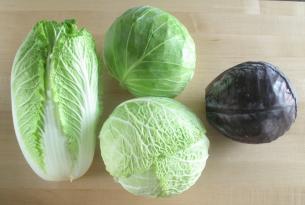
These are the four types of cabbage we grow
(clockwise from left):  Napa (also known as
 Chinese) cabbage, green cabbage, red cabbage,
 and Savoy cabbage.
        At our farm we grow red, Savoy, Napa, and green cabbage.  We start the plants by seeding them in flats in the greenhouse, where they grow for four or five weeks before we transplant them into the soil.  In the spring, we mostly raise them on plastic beds to help ward off soil-borne diseases by keeping the leaves cleaner.  The plastic also warms the cool spring soil to get the plants growing faster.  These cabbage plants are heavy feeders and require a lot of soil fertility.  We give them slightly less fertility than recommended so we can keep the heads more of a reasonable size for the average household.  Cabbages can get pretty huge under the right conditions; the record in the Guinness Book of World Records for the largest cabbage is 127 pounds!  
Under the right conditions, some cabbages
can get to be gigantic!
          Harvesting cabbage is a lot less complicated than many other crops.  We just cut the head off with a knife after the head is nice and firm, and then trim off some of the outer leaves.  The worst thing about this otherwise easy harvest is just lifting so many heavy crates of cabbage!
          At home our favorite cabbage dish is fried cabbage with bacon and tomato, with a little cheese, onion, and cayenne pepper. We sometimes also make sauerkraut by adding salt and letting the cabbage and salt ferment.  This traditional method of making sauerkraut is a much healthier way than the vinegar method most common today.   The salt preserves the vitamin C, and also leaves a beneficial salt-tolerant bacteria that is very helpful in digestion.
          This week in the shares you folks will be getting Savoy, green, and Napa cabbage, and eventually we will also have red as well.  There are a lot of delicious things to do with cabbage, so if you need ideas, check out the recipes below!

Recipes

Try out these Roast Chicken Soft Tacos, which include
the cabbage, cilantro, and radishes in your share!
Now that you're a cabbage expert, the only question you probably still have is, "So what can I make with it besides corned beef and cabbage, or cabbage soup?"  To help answer that question, here are 23 Easy Cabbage Recipes from health.com.  It includes everything from coleslaw for your 4th of July cookout, to Roast Chicken Soft Tacos that include lots of cabbage , to Buffalo Burgers with Red Cabbage Slaw, and of course, plenty of recipes for Cabbage Soup.  Enjoy!

Sunday, June 22, 2014

CSA Newsletter for June 22, 2014

Farm Update

The pigs are growing quickly, and they are really enjoying
 running around on their pasture!
Hi everyone!  Things have been going well around the farm; we've been getting a lot of rain lately, which has helped push along several crops.  The leafy green veggies are really liking the weather lately, and the beets and other cool season crops have really benefited from the cooler temperatures. The rain has also decreased our insect pressure because most of the bugs are moving back out into the adjacent pasture now that everything is a little more lush.  All the cool, wet weather has given us some concern for the strawberries, because this is just the type of weather that can cause strawberry rot, so we are really keeping our fingers crossed that they keep their quality over the next week.  Weeds are also becoming more of an issue too (because the weather that pushes along the plants we like also pushes along the plants we don't like), so we are going to be battling them over the next few weeks.  In other news, we have recently added another mini drop-off!  Our friend Ryan Jankoska is starting up a food hub in Bay City, and part of what he does is pick up several prepacked CSA shares at our farm and take them to Bay City, to some people who have signed up through him for our CSA.  So for all the Bay City folks, welcome to the program!  


What to Expect in This Week's Share

  • Choice between broccoli, beets, and spinach
    Keegan and Joe planting some gold turnips for later in the season.
  • Snap peas for everyone!
  • Strawberries for everyone (seriously, keep your fingers crossed!)
  • Choice between salad mix and head lettuce
  • Choice between radishes, gold turnips, and fennel
  • Choice between bok choy, kale, and chard
  • Choice between baby leeks, kohlrabi, and frisee


Menu Planning for All Your Veggies

CSAs are great for many reasons, but one thing that does become trickier if you're in a CSA is menu planning, because you don't know what ingredients you're going to have to work with each week.  Admittedly, we don't do much menu planning around our house; Fred is the main cook around here, and he has an amazing knack for opening up the fridge, seeing what's in there, and putting an amazing meal on the table within half an hour.  I don't have that talent.  When he's out in the field and I have to make lunch for myself and our little ones, I usually open up the fridge, draw a blank, and make veggie pasta again.  But if you're the menu planning type, you can take a break from it (kind of), because I've done it for you this week!  Here are five weeknight dinner ideas that use most of the veggies in this week's share!  I also looked for recipes that don't call for a bunch of crazy ingredients or take the whole evening to make.  Enjoy!

Day 1: I'm thinking breakfast for dinner tonight!  Try out these Peppery Turnips and Spinach along with eggs and fresh strawberries!
Swiss Chard and Beet Tacos with Vegan Crema
Day 2: Beef, Snap Pea, and Broccoli Stir-Fry.  As always, feel free to switch out the beef for chicken, tofu, or whatever you like best.
Day 3: Swiss Chard and Beet Tacos with Vegan Crema.  Or for the non-vegans, just use regular sour cream with a little Siracha or paprika mixed in instead of the vegan crema.  And if you don't end up with chard in your share, use kale instead.
Day 4: Leek and Fennel Soup.  The recipe includes celery, but you could also used finely sliced kohlrabi or bok choy stems instead.  It also calls for vegetable bouillon, but if you're feeling ambitious, you could make a stock out of whatever veggies you have left over from last week.  Then freeze the leftover stock in an ice cube tray and pull out the cubes whenever you need them!
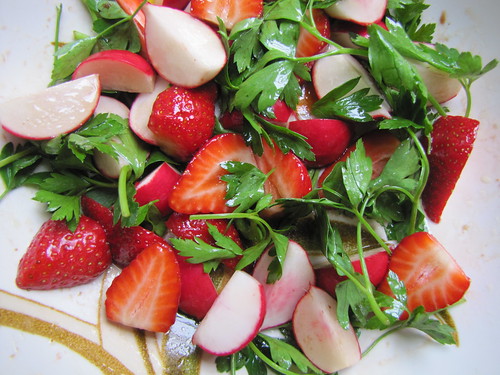
Strawberry and Radish Salad with Balsamic Vinegar
Day 5:  Strawberry and Radish Salad with Balsamic Vinegar.  This looks totally delicious with the parsley called for in the recipe, but if you don't have fresh parsley on hand, you can always use your head lettuce or salad mix instead for kind of a different take on the recipe.  This would also be awesome with some avocado slices mixed in!

So hopefully that will take care of the "What's for dinner?" question for at least a few nights this week!  If you make any of the recipes, let me know how it turns out! :-)